Tiny Home Storage Ideas: 15 Smart Ways to Maximize Every Inch of Space
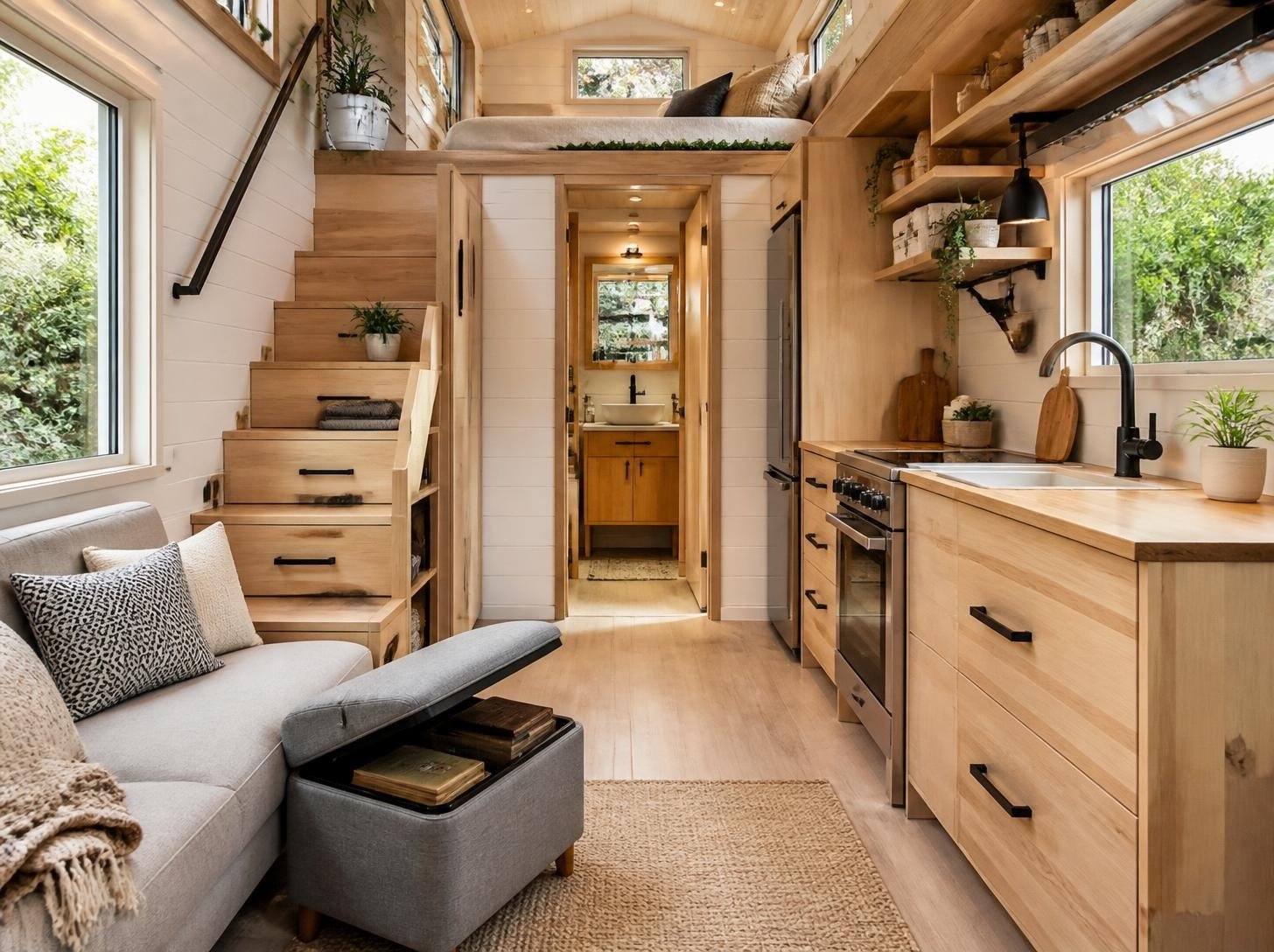
Living in a tiny home can be incredibly rewarding, but keeping everything organized is not always easy. When your kitchen, bedroom, living room, and sometimes even your workspace share a few hundred square feet, every inch matters.
Without a thoughtful storage system, everyday belongings can quickly take over your counters, furniture, and walkways.
The good news is that you don’t need a bigger home to create a more organized one. The right tiny home storage ideas can help you make better use of vertical space, turn overlooked corners into useful storage, and keep essential items within reach without making your home feel crowded.
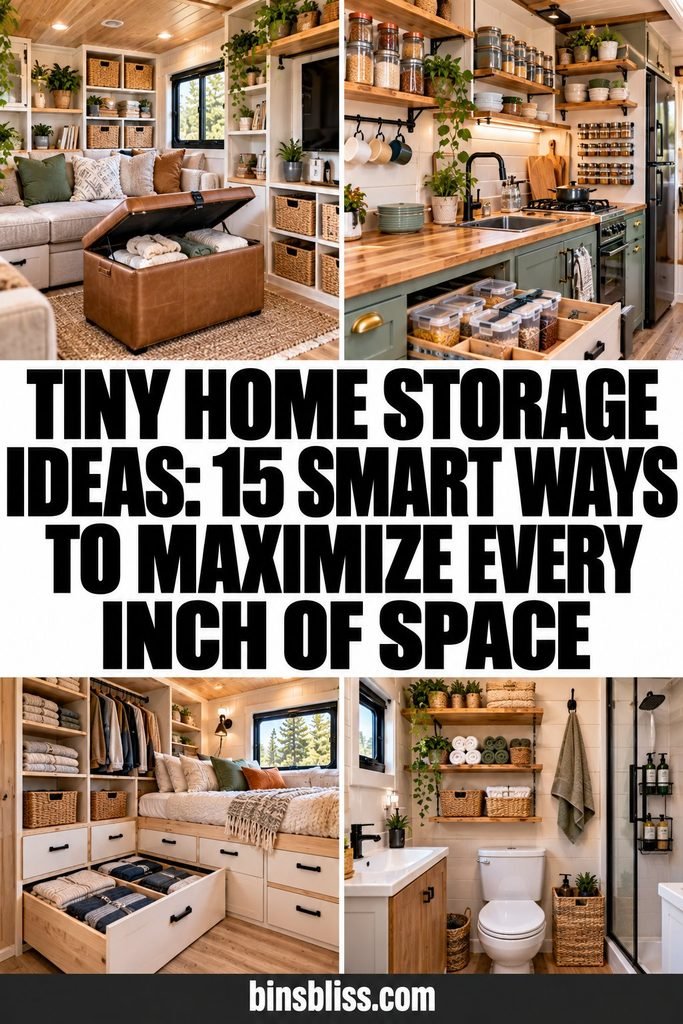
I especially like storage solutions that serve more than one purpose. A bench that hides shoes, a bed with built-in drawers, or a narrow shelf above a doorway can add useful storage without taking up much additional floor space.
Whether you live in a tiny house on wheels, a compact cabin, a small studio, or a minimalist home, these practical ideas can help you create a space that feels comfortable, functional, and easier to maintain.
Why Smart Storage Matters in a Tiny Home
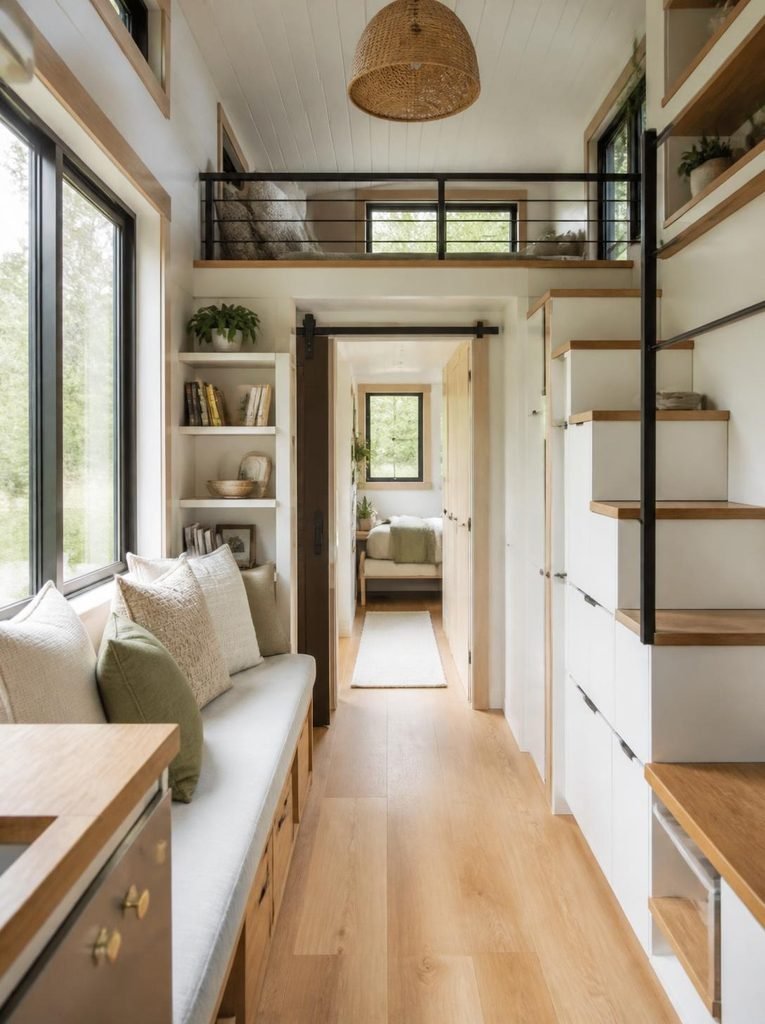
In a small home, clutter can build up quickly because there is less room for belongings to spread out. A few items left on the kitchen counter or a pile of clothes beside the bed can make an entire room feel crowded.
Smart storage helps you use the space you already have instead of constantly looking for somewhere else to put things. It can also make daily routines simpler because frequently used items have a designated place.
Here are a few benefits of organizing your tiny home thoughtfully:
- More usable floor space: Wall-mounted shelves, under-bed drawers, and built-in cabinets help keep the floor clear.
- Less visual clutter: Closed storage hides everyday belongings and gives rooms a calmer appearance.
- Easier daily routines: When everything has a place, finding clothing, cooking supplies, and household essentials becomes simpler.
- Better use of overlooked areas: Corners, doorways, staircases, and the space beneath furniture can provide valuable storage.
- A more comfortable home: An organized layout makes a small space feel more open and functional.
Before buying organizers, take a look at what you already own. Decluttering items you no longer use can free up space immediately, and it helps you choose storage solutions based on your actual needs rather than trying to fit every available organizer into your home.
1. Use Under-Bed Storage to Maximize Hidden Space
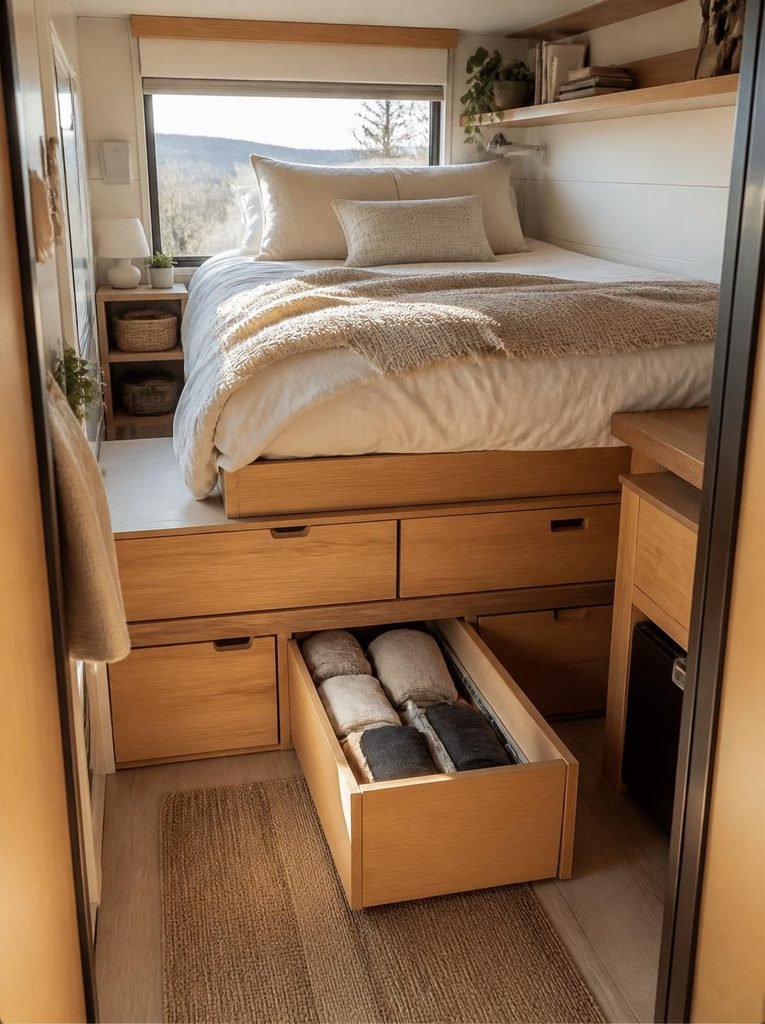
The space beneath your bed is one of the most useful storage areas in a tiny home. Instead of allowing it to remain empty or collecting dust, you can use it to store clothing, spare bedding, shoes, seasonal items, or other belongings you don’t need every day.
This idea works especially well in tiny bedrooms where adding a separate dresser would take up valuable floor space.
How to make it work:
- Choose a bed frame with built-in drawers if you’re furnishing your tiny home from scratch.
- Use low-profile storage bins that slide easily beneath the bed.
- Store seasonal clothing and extra blankets in breathable bags or suitable containers.
- Keep frequently used items in the easiest-to-reach drawers.
- Use labeled containers to identify what is stored without pulling everything out.
My tip: Measure the clearance beneath your bed before buying storage bins. A container that is too tall can become frustrating to use, while one that is too small may waste valuable space.
If you’re designing a tiny home yourself, consider a raised bed with accessible drawers or a properly designed storage platform. Just make sure the bed remains comfortable and that ventilation requirements for mattresses are maintained.
2. Install Vertical Shelving to Free Up Floor Space
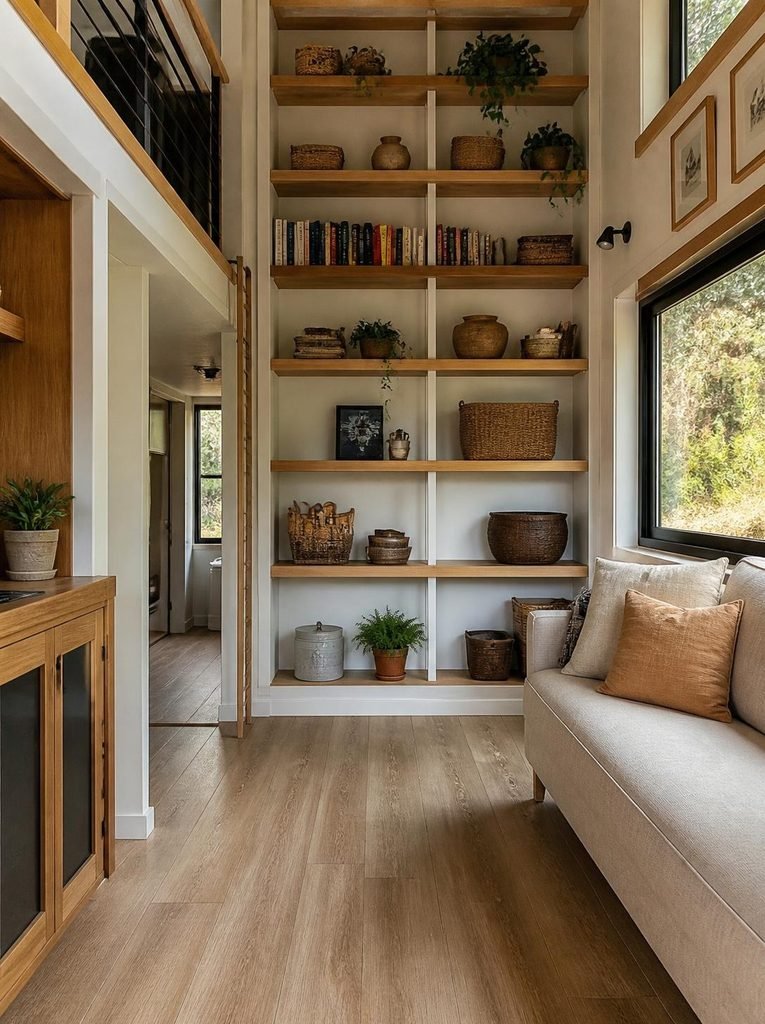
When floor space is limited, look upward. Vertical shelving allows you to store books, baskets, kitchen supplies, decorative items, and everyday essentials without adding bulky furniture to the room.
Instead of filling a tiny home with several low cabinets, you can use the height of your walls to create more storage in a smaller footprint.
How to make it work:
- Install sturdy shelves above desks, countertops, and compact workstations.
- Use tall shelving units that fit the available wall space.
- Keep frequently used items on lower shelves for easier access.
- Store lightweight decorative items higher up.
- Use matching baskets or containers to create a cleaner appearance.
My tip: In a tiny home on wheels, shelves need to be secured properly for travel. Use mounting hardware appropriate for the wall structure and follow the manufacturer’s instructions. Avoid placing heavy objects overhead where they could fall.
Vertical shelving is particularly useful in living rooms, kitchens, and workspaces where adding another cabinet might make the area feel cramped.
3. Choose Multi-Functional Furniture With Built-In Storage
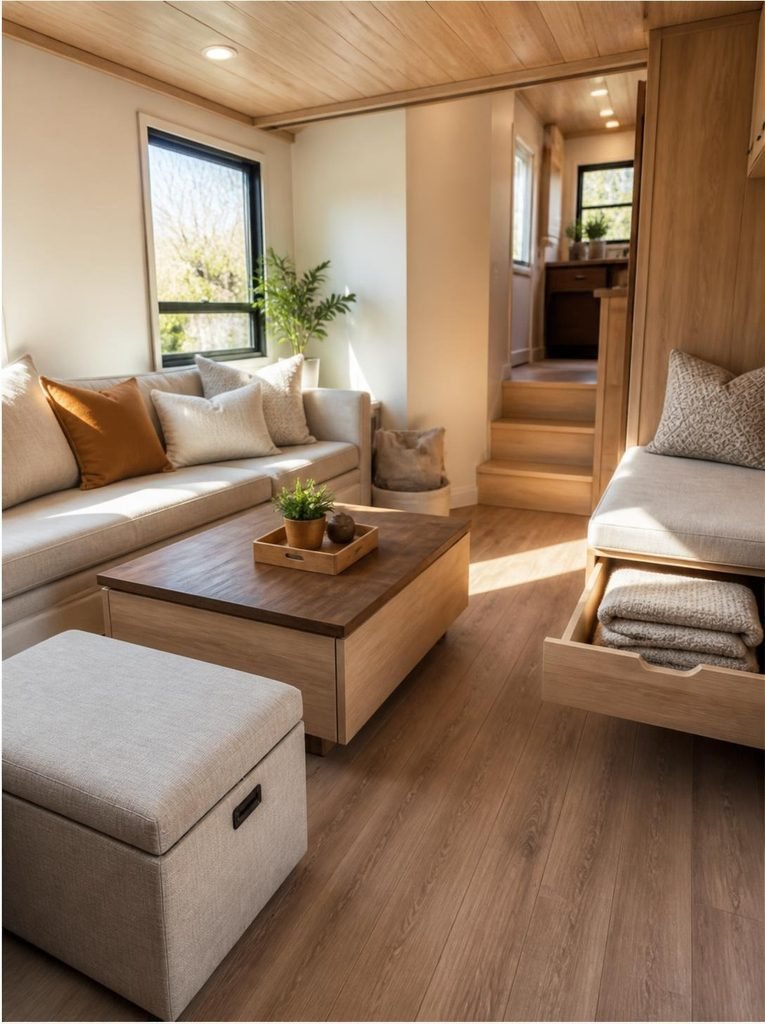
One of the smartest tiny home storage ideas is choosing furniture that performs more than one job. When every piece of furniture occupies limited floor space, it makes sense to choose designs that offer both everyday functionality and hidden storage.
For example, an ottoman can provide a place to rest your feet while holding blankets inside. A storage bench can provide seating near the entrance while keeping shoes out of sight.
Furniture ideas to consider:
- Storage ottomans for blankets, books, or remote controls
- Benches with compartments for shoes and bags
- Coffee tables with drawers or lift-up tops
- Sofa beds with built-in storage
- Dining tables with shelves or concealed compartments
- Compact desks with integrated drawers
My tip: Think about how you use a room before choosing multifunctional furniture. A storage coffee table is useful if you regularly need a place for books and accessories, but a bulky design may not be worthwhile if it blocks your main walkway.
Measure the furniture when fully opened, too. A sofa bed or extending table should fit comfortably without preventing access to doors, cabinets, or other essential areas.
4. Turn Your Staircase Into Hidden Storage
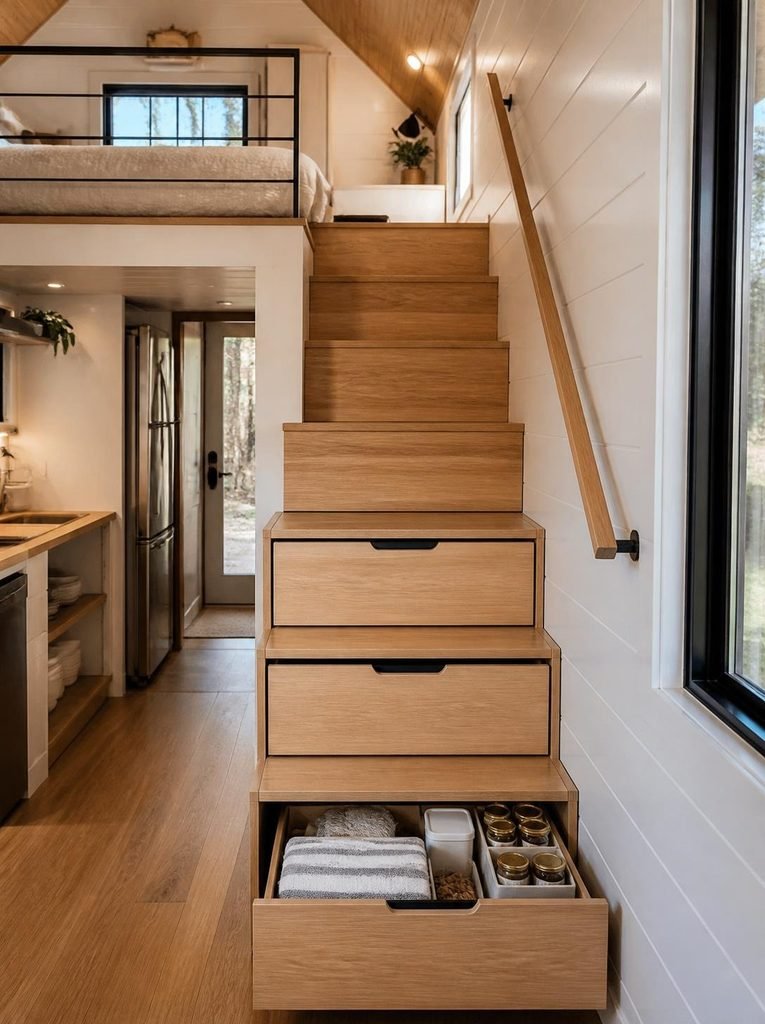
If your tiny home has a loft bedroom, the staircase can provide far more than a way to reach the upper level. Properly designed staircases can incorporate drawers, cupboards, or open compartments that use space that would otherwise be lost.
This solution is especially valuable in tiny houses where a separate wardrobe or large storage cabinet might not fit.
How to make it work:
- Use pull-out drawers beneath individual steps for clothing and accessories.
- Create enclosed cupboards for cleaning supplies or household essentials.
- Add open cubbies for baskets and frequently used items.
- Reserve easily accessible compartments for belongings you use regularly.
- Keep heavier items in appropriately designed lower storage compartments.
My tip: Plan staircase storage before building the stairs, rather than trying to add drawers afterward. The staircase must remain structurally sound and safe to use, with suitable tread dimensions, headroom, handrails, and access.
Avoid turning every step into a storage compartment if doing so would compromise the staircase design. Safety and comfortable movement should always come first.
5. Use the Space Above Doors and Windows
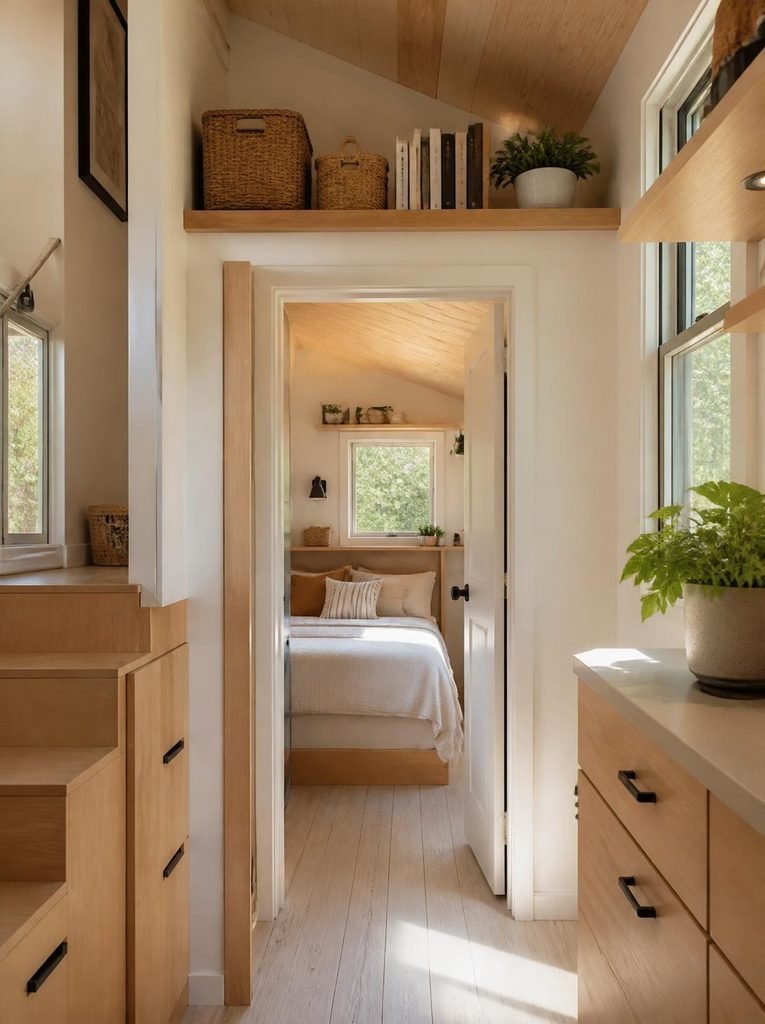
The narrow spaces above doors and windows are easy to overlook, but they can provide useful storage in a tiny home.
A slim shelf above an interior doorway can hold books, small baskets, lightweight seasonal accessories, or decorative items. Similarly, a carefully positioned shelf above a window can make use of wall height without taking up floor space.
How to make it work:
- Install a narrow shelf above a doorway where there is sufficient clearance.
- Use the area above windows for lightweight baskets or decorative storage.
- Store items you don’t need to reach every day in higher locations.
- Choose a shelf depth that doesn’t interfere with doors, curtains, or window operation.
- Secure the shelf properly to suitable structural supports.
My tip: Keep heavy or fragile belongings away from high shelves above frequently used doorways and seating areas. In a tiny home on wheels, overhead items must be secured against movement during travel.
These shelves work best for belongings you use occasionally. Keep everyday essentials at a comfortable height so you don’t need to climb or stretch repeatedly.
6. Install Wall-Mounted Organizers in the Kitchen
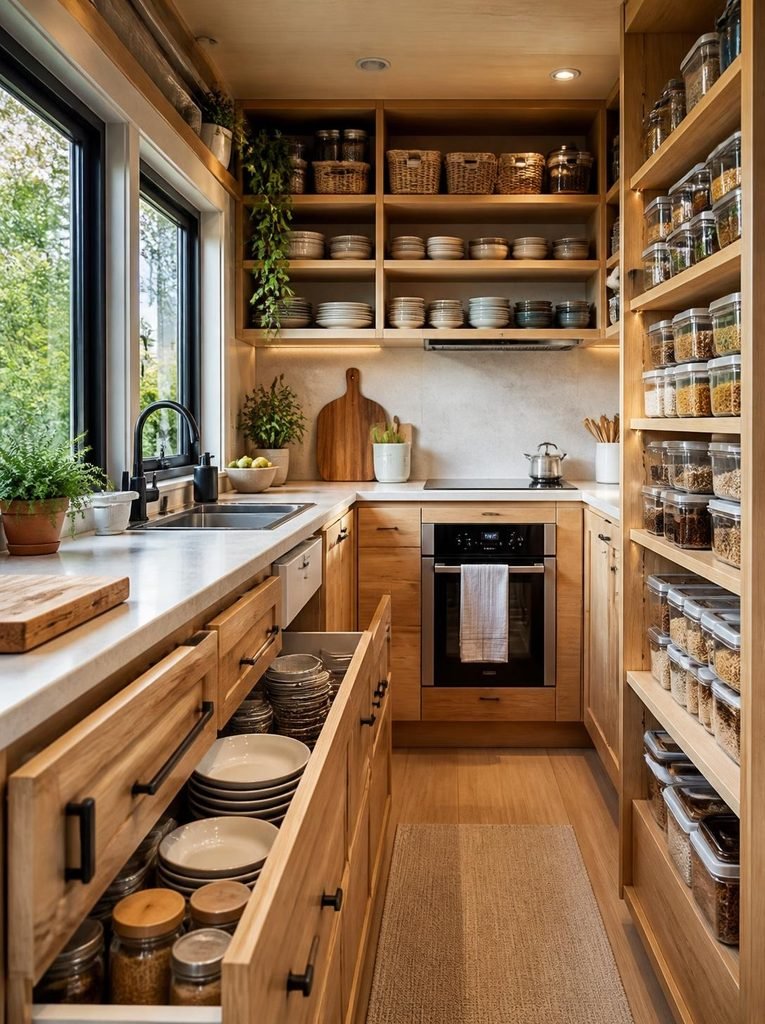
Tiny kitchens often have limited counter space, which makes wall-mounted organizers particularly useful. Instead of leaving cooking utensils, spices, and kitchen accessories scattered across the counter, you can move suitable items onto the walls.
A well-organized wall can keep essential tools within reach while freeing up valuable preparation space.
How to make it work:
- Install a magnetic knife holder designed for kitchen use, mounted securely and away from children’s reach.
- Use wall-mounted rails with hooks for frequently used utensils.
- Add a narrow spice shelf near your cooking area.
- Hang lightweight mugs from a properly installed mug rack.
- Use a wall-mounted paper towel holder to free up counter space.
My tip: Keep anything exposed to heat, steam, or grease away from unsuitable mounting surfaces. Heavy items need secure fixings, and anything mounted above a counter should be positioned so it cannot easily fall onto food or cooking equipment.
7. Use Storage Baskets Under Benches and Seating
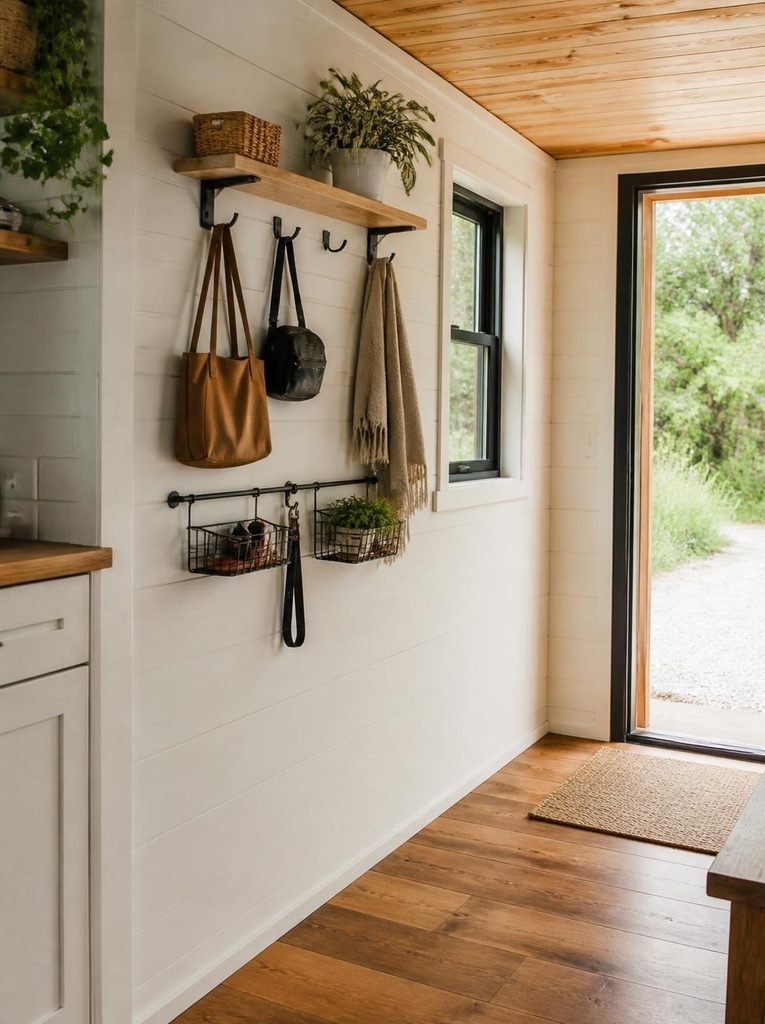
The space beneath a built-in bench or compact sofa can provide useful storage without adding another piece of furniture. This is particularly helpful in tiny homes where seating areas often serve as dining rooms, reading corners, and relaxation spaces.
Storage baskets also make it easier to group similar belongings together.
How to make it work:
- Place baskets beneath dining benches for reusable shopping bags and household accessories.
- Store blankets and cushions beneath living room seating.
- Use lidded containers for belongings that need protection from dust.
- Choose baskets that slide out easily without scratching the floor.
- Group similar items in separate containers to avoid mixing everything together.
My tip: Measure the available height, width, and depth before purchasing baskets. Leave enough room to pull them out comfortably, especially if the bench sits close to a table or wall.
If you have pets, choose durable baskets that won’t easily splinter or shed pieces if chewed.
8. Create a Compact Closet With Vertical Organization
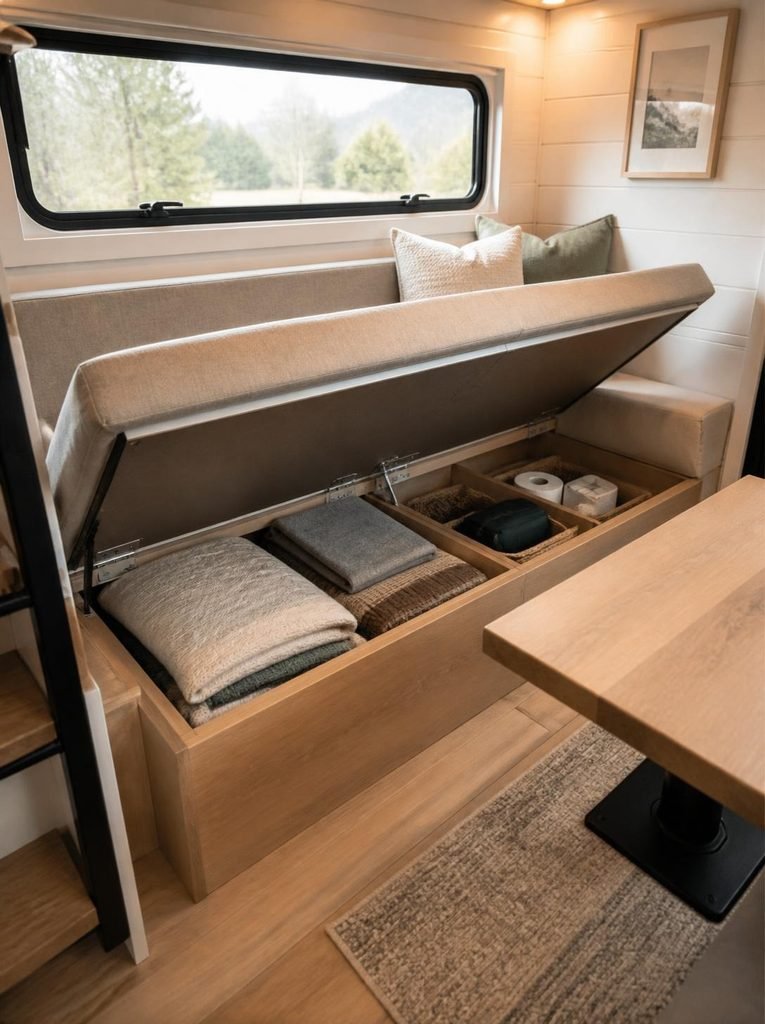
A tiny home’s closet may not have enough room for a traditional wardrobe, but a carefully organized compact closet can still hold more than you might expect.
The goal is to use the available height and keep clothing organized without cramming everything together.
How to make it work:
- Install a second hanging rail for shorter garments where the layout allows.
- Use slim hangers to reduce wasted space.
- Add hanging fabric organizers for accessories and folded clothing.
- Place shoes on a compact rack or in suitable storage boxes.
- Store seasonal clothing separately in labeled containers.
- Use shelf dividers to keep folded clothes from toppling over.
My tip: Keep everyday clothing at eye level and less frequently used items on higher shelves. Avoid overfilling the closet because tightly packed clothing becomes harder to find and may wrinkle more easily.
9. Use the Inside of Cabinet Doors
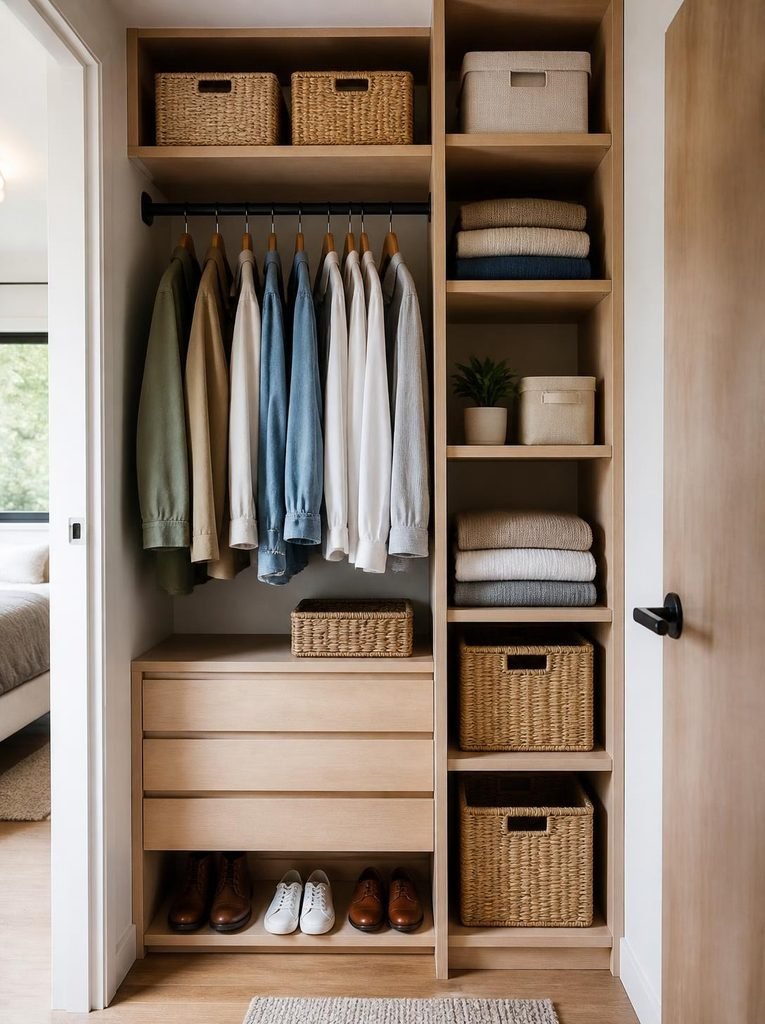
Cabinet doors are often overlooked when planning storage. Their inner surfaces can hold lightweight accessories, small containers, and everyday essentials without taking up additional shelf space.
This is especially helpful in tiny kitchens, bathrooms, and utility cabinets.
How to make it work:
- Attach a suitable rack inside a pantry door for lightweight packets or small kitchen accessories.
- Use a door-mounted organizer for cleaning cloths and household supplies.
- Install small hooks for measuring spoons or other lightweight utensils.
- Add a compact organizer inside a bathroom cabinet for grooming accessories.
- Keep heavier objects in fixed shelves rather than hanging them from the door.
My tip: Check the clearance before installing anything. An organizer that sticks out too far can prevent the cabinet from closing or interfere with nearby drawers and appliances.
Use mounting hardware compatible with the cabinet material, and avoid drilling where plumbing, wiring, or other hidden components may be present.
10. Choose a Fold-Down Desk or Dining Table
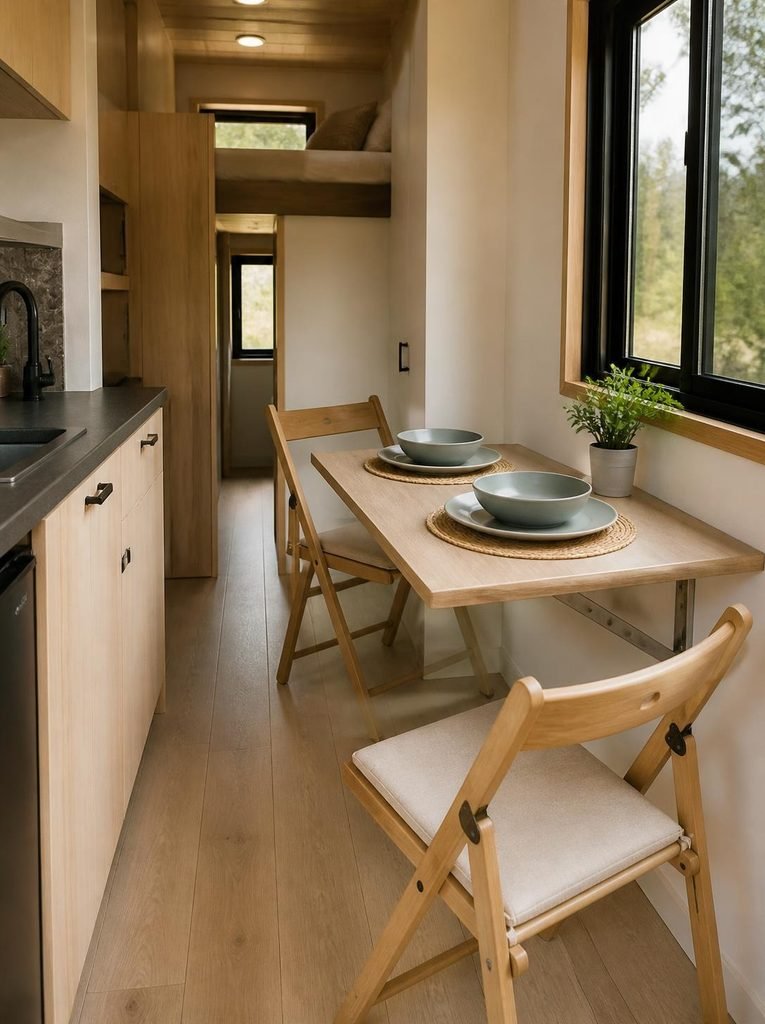
A conventional desk or dining table can occupy a surprising amount of floor space in a tiny home. A fold-down design gives you a functional work or eating surface when needed and allows you to reclaim the space afterward.
This is especially useful if you work from home or prefer a dedicated dining area but don’t have room for permanent furniture.
How to make it work:
- Install a wall-mounted fold-down desk in a compact workspace.
- Choose a folding dining table that can be stored against a wall.
- Use folding chairs that fit into a closet or narrow storage space.
- Keep essential work supplies in a nearby drawer or basket.
- Ensure the table has adequate support and a reliable locking mechanism.
My tip: Consider how much legroom you need and whether the table will block a walkway when opened. If you live in a tiny home on wheels, secure folding furniture for travel and avoid using wall-mounted furniture while the vehicle is moving.
11. Install Pull-Out Pantry Drawers
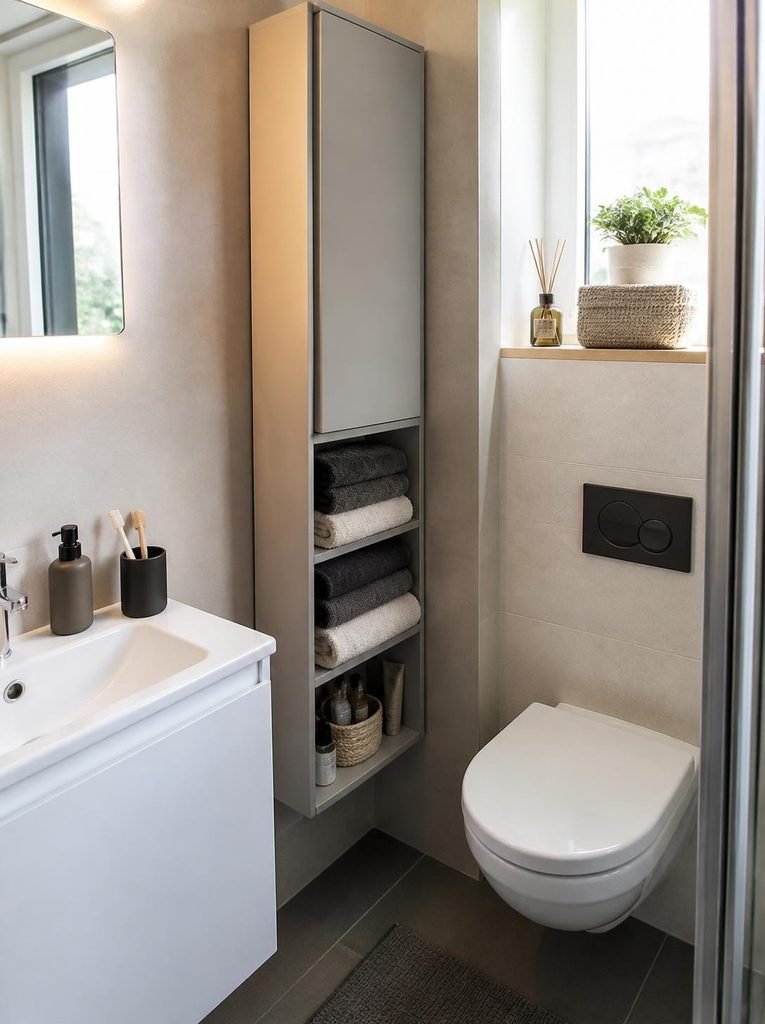
Deep kitchen cabinets can be difficult to organize because items at the back become hidden behind those in front. Pull-out pantry drawers make it easier to reach food containers, spices, and cooking supplies without removing everything from the shelf.
They can be particularly helpful in narrow kitchens where a full-size pantry cabinet would be impractical.
How to make it work:
- Add pull-out baskets to suitable existing cabinets.
- Use narrow sliding organizers for cans, jars, and packaged food.
- Keep frequently used ingredients near the front.
- Group baking supplies, breakfast foods, and cooking essentials separately.
- Choose drawer systems rated for the weight you intend to store.
My tip: Measure the cabinet opening, internal depth, and clearance around hinges before buying a pull-out organizer. Make sure the drawer slides smoothly and doesn’t obstruct nearby doors or appliances.
12. Maximize Bathroom Storage With Corner Shelves
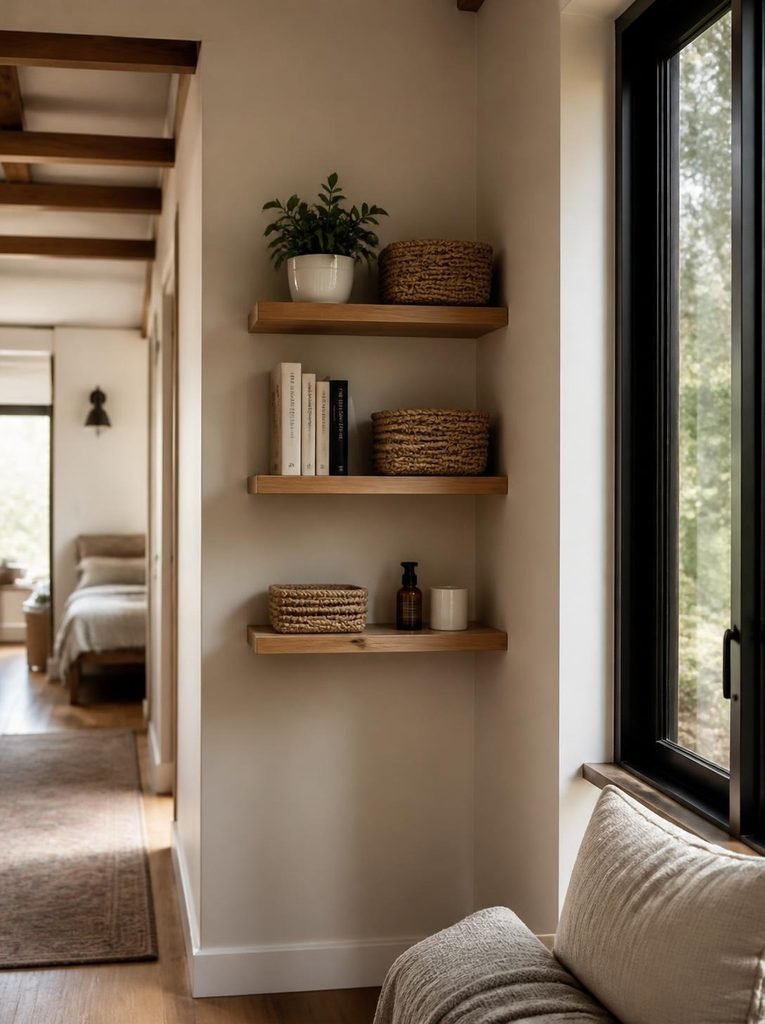
Tiny bathrooms often have limited vanity space and few places to store toiletries. Corner shelves can make use of awkward spaces while keeping everyday products accessible.
Instead of adding a bulky cabinet, you can install compact shelves or a suitable shower organizer.
How to make it work:
- Add corner shelves for toiletries and skincare products.
- Use a wall-mounted dispenser for products you use regularly.
- Store spare towels in a narrow cabinet or wall-mounted shelf.
- Place small baskets inside the vanity for grooming accessories.
- Use hooks for towels and bathrobes where they won’t interfere with doors.
My tip: Choose moisture-resistant materials and ensure shelves are installed securely. Keep products away from electrical outlets and other areas where water could create a hazard.
Avoid overcrowding shower shelves because excessive weight, soap residue, and moisture can make storage less reliable.
13. Use a Pegboard for Flexible Storage
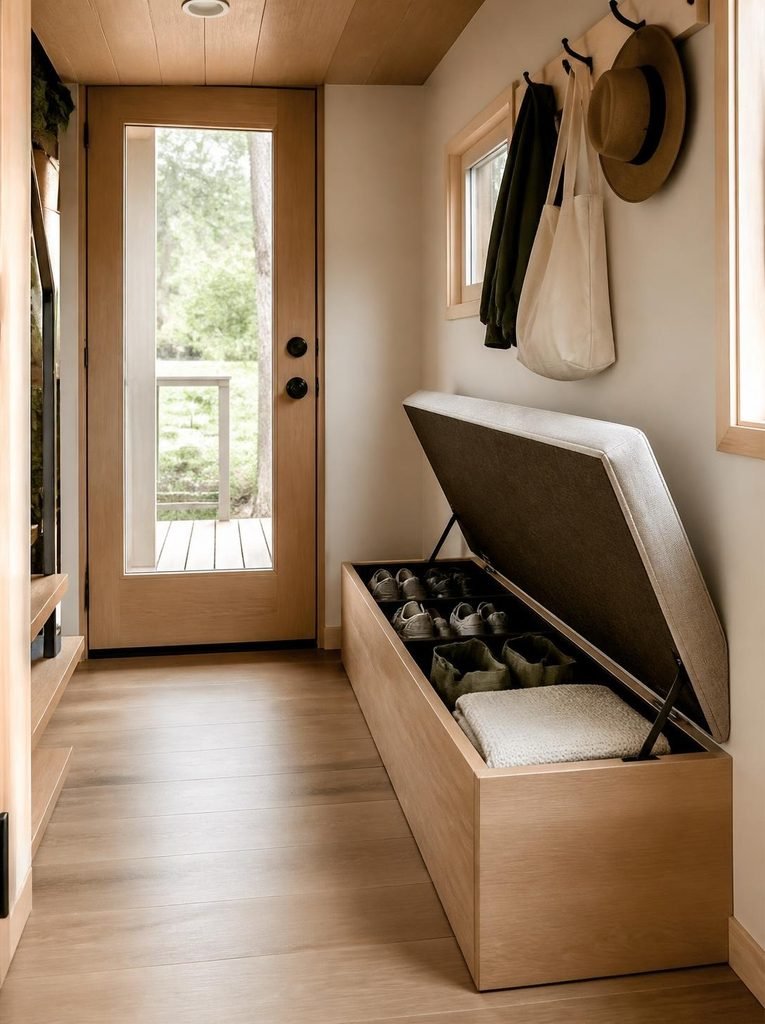
A pegboard is a versatile option for tiny homes because you can rearrange hooks, small shelves, and baskets whenever your storage needs change.
It can be useful in a craft corner, home office, utility area, or kitchen, depending on the materials and accessories you choose.
How to make it work:
- Mount the pegboard securely to a suitable wall or support frame.
- Use hooks for lightweight tools, scissors, and frequently used accessories.
- Add small baskets for stationery, cables, or craft supplies.
- Keep heavier objects on shelves or mounts designed for their weight.
- Rearrange the layout when your storage needs change.
My tip: Plan the arrangement before loading the board. Keep sharp tools and potentially hazardous items away from children and pets, and make sure the mounting system can support the combined weight.
14. Build Storage Into the Entryway
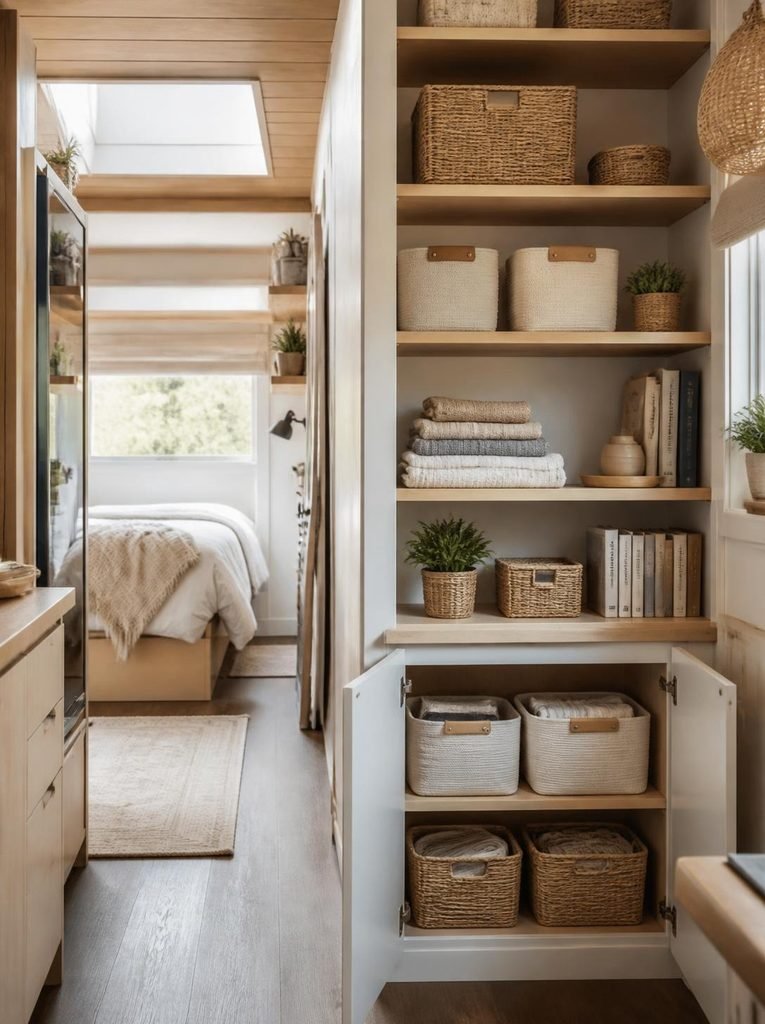
A small entryway can quickly become cluttered with shoes, coats, bags, keys, and outdoor accessories. A compact storage station helps contain these items before they spread into the rest of your home.
Even if your tiny home doesn’t have a separate hallway, you can create a designated entry area beside the door.
How to make it work:
- Add wall hooks for coats, hats, and everyday bags.
- Use a slim shoe rack or a storage bench near the entrance.
- Install a small shelf or tray for keys and sunglasses.
- Place a washable mat near the door to catch dirt.
- Store seasonal outdoor accessories in a compact basket.
My tip: Keep the main walkway clear and avoid placing furniture where it blocks the door from opening fully. In a tiny home, a narrow, well-organized entryway is often more practical than a large collection of storage furniture.
15. Use Matching Containers to Reduce Visual Clutter
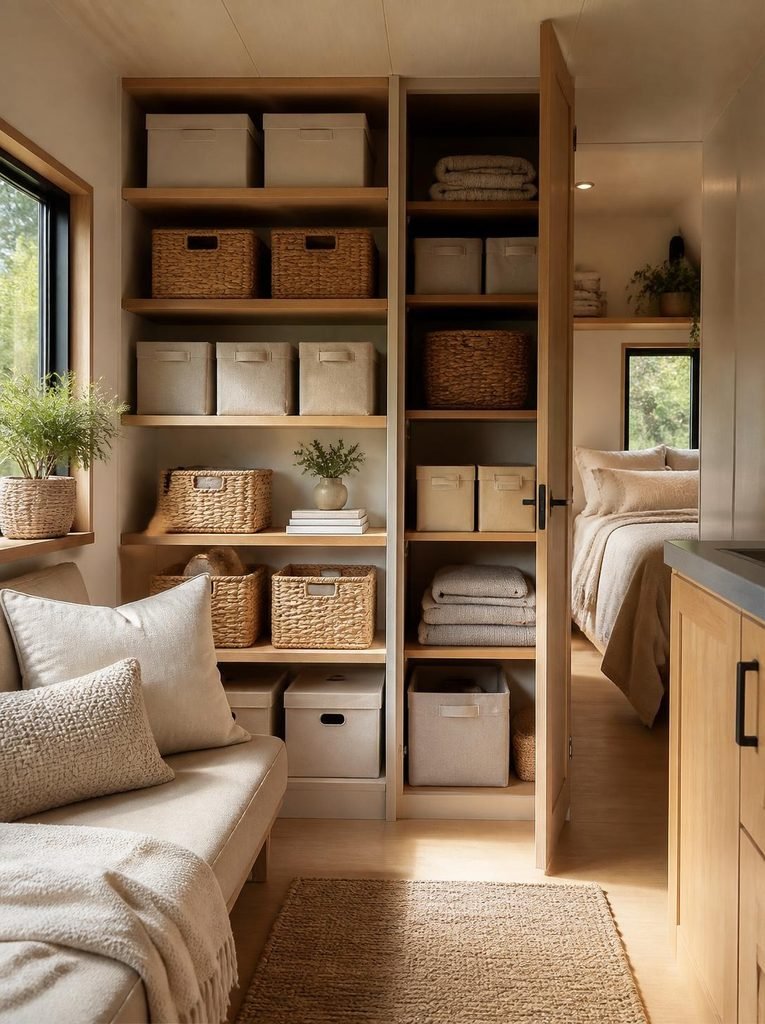
Sometimes a tiny home feels cluttered even when there is technically enough storage. Different packaging, loose accessories, and mismatched containers can make open shelves look busy.
Matching storage containers create a more consistent appearance while keeping everyday belongings grouped together.
How to make it work:
- Choose a small set of containers in complementary colors.
- Use clear containers for items you need to identify quickly.
- Choose opaque containers for belongings you want to keep out of sight.
- Store similar items together rather than mixing unrelated categories.
- Label containers where it helps you find things faster.
- Leave some empty shelf space instead of filling every available gap.
My tip: Don’t buy containers before deciding what you need to store. Sort your belongings first, measure the available shelves, and choose containers that fit the space without wasting room.
Matching containers can improve the look of your home, but the real goal is making storage easier to maintain.
Extra Tips for Maximizing Tiny Home Storage
Making the most of a tiny home starts with being intentional about what you keep and where you store it.
Before buying new organizers, declutter your belongings and remove items you no longer use. Measure shelves, cabinets, and unused corners so you can choose storage solutions that fit properly.
Keep everyday essentials within easy reach and store seasonal items in higher cabinets or under the bed.
Choose furniture with built-in storage whenever possible, and use matching baskets to create a cleaner appearance. Avoid filling every available space, because you still need room to move comfortably.
If your tiny home is on wheels, secure shelves, drawers, and containers so belongings stay in place during travel. A simple, consistent organization routine will help your home remain functional and clutter-free.
Frequently Asked Questions About Tiny Home Storage
1. How do you maximize storage in a tiny home?
Use vertical shelving, under-bed drawers, staircase compartments, wall-mounted organizers, and multifunctional furniture. Decluttering regularly also frees up valuable space.
2. What furniture is best for tiny homes?
Storage ottomans, convertible sofa beds, benches with compartments, fold-down tables, and beds with built-in drawers are excellent choices because they serve multiple purposes.
3. How do you keep a tiny home from looking cluttered?
Give every item a designated place, use matching storage containers, keep countertops clear, and avoid purchasing organizers you don’t genuinely need.
4. Where should you store seasonal items in a tiny home?
Store seasonal clothing, spare bedding, and occasional-use accessories in labeled under-bed containers, upper cabinets, or secure storage compartments.
5. Are open shelves a good idea for tiny homes?
Yes. Open shelves make use of vertical space and keep essentials accessible. However, avoid overcrowding them, and use baskets to group smaller items neatly.
6. How can you create more kitchen storage in a tiny home?
Use stackable containers, cabinet organizers, wall-mounted racks, magnetic storage where suitable, and narrow shelves. Keep frequently used cooking supplies close to your preparation area.
7. How often should you declutter a tiny home?
Review your belongings every few weeks or whenever storage begins to feel crowded. A quick daily reset can also prevent clutter from accumulating.
8. What is the biggest tiny home storage mistake?
One common mistake is buying too many storage products before assessing your belongings and available space. Declutter first, measure carefully, and choose practical solutions that preserve comfortable walkways.
Final Thoughts on Tiny Home Storage Ideas
Living in a tiny home doesn’t mean you have to sacrifice comfort or keep your belongings in constant disarray.
With thoughtful planning, you can turn unused corners, wall space, furniture compartments, and narrow cabinets into practical storage areas.
Start with the changes that solve your biggest everyday problems. If your kitchen counters are always crowded, try wall-mounted organizers.
If your bedroom lacks a dresser, explore under-bed storage. If your entryway fills with shoes and bags, create a dedicated drop zone.
You don’t need to implement all 15 ideas at once. Make a few improvements, see how they work with your daily routine, and adjust as needed.
The best tiny home storage system is one that keeps essential items accessible, protects your walkways, and makes your home feel comfortable rather than crowded.
By focusing on useful storage instead of simply adding more containers, you can make the most of every inch while maintaining a clean, welcoming space.