How to Declutter All Your Piles of Crap When You’re Super Overwhelmed
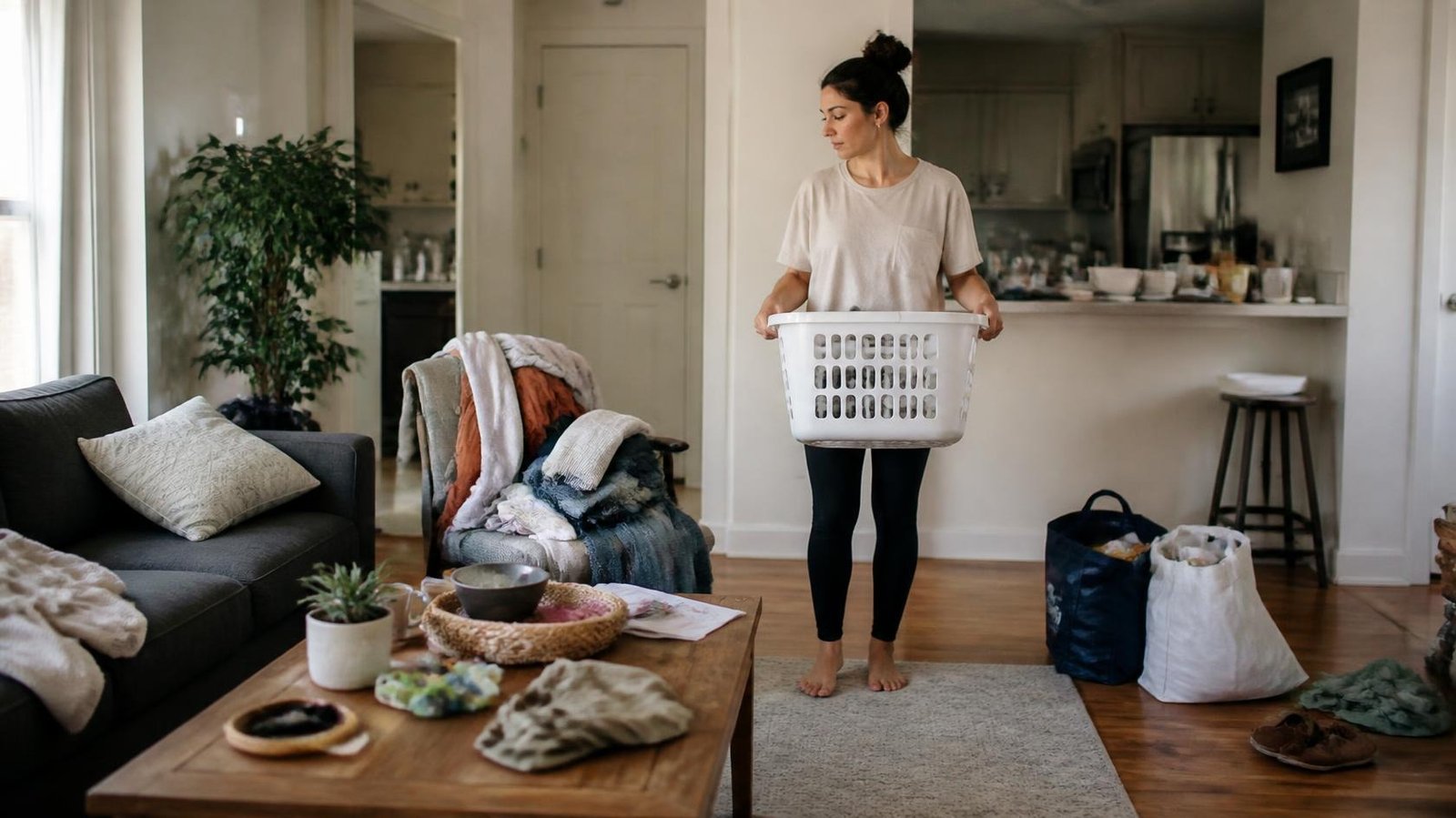
If your home is covered in piles of clothes, random papers, unopened packages, dishes, and things you keep telling yourself you’ll deal with later, I want you to know something: you do not have to fix everything today.
When clutter builds up, even simple tasks can feel impossible. You look at the mess, think about everything you need to do, and suddenly you have no idea where to start. So you put it off, feel guilty about it, and the piles keep growing.
I know how tempting it can be to wait for the perfect day when you have enough energy to clean the entire house.
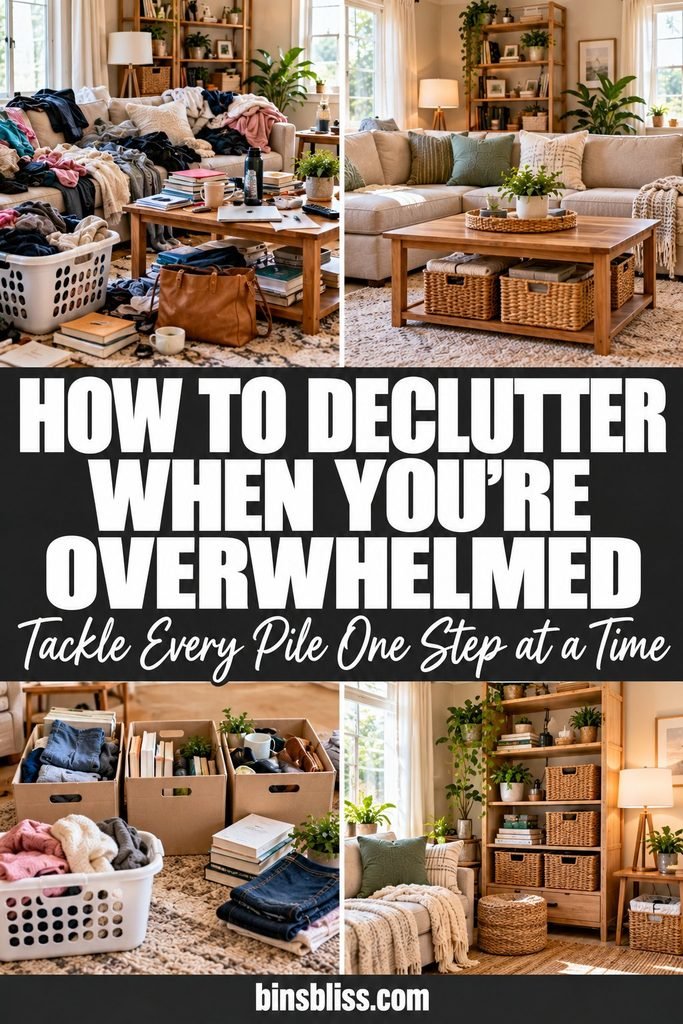
But the truth is, you do not need a full weekend, expensive storage containers, or a perfect organizing system to make progress.
You need a starting point that feels manageable.
In this guide, we’ll break down how to declutter all those piles of crap when you’re super overwhelmed, even if your home feels like it has gotten completely out of control.
We’ll focus on small steps, simple decisions, and realistic ways to make your space feel lighter without exhausting yourself in the process.
Why Clutter Feels So Overwhelming
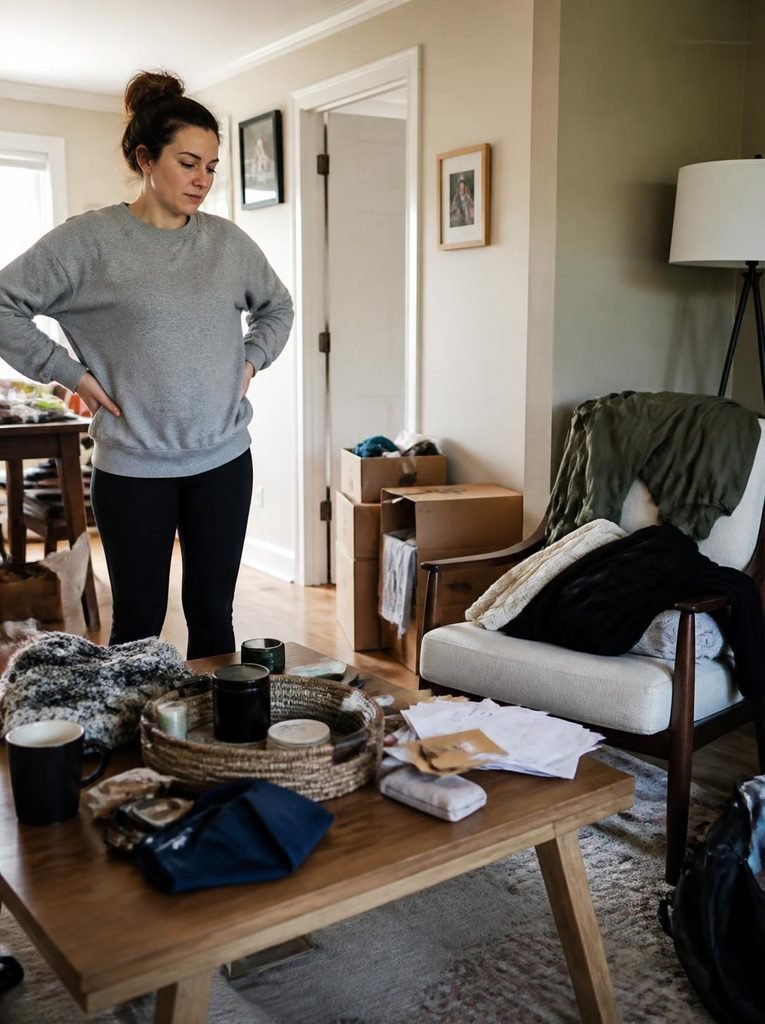
Clutter is not just about the things scattered around your home. It can also create a constant feeling that you have unfinished business everywhere you look.
A pile of laundry reminds you that you need to wash clothes. Papers on the dining table remind you to sort through bills and documents. A crowded kitchen counter makes cooking feel harder than it should be.
When every room seems to need attention, your brain can struggle to decide which task deserves your attention first.
Here are a few reasons decluttering can feel especially difficult:
- Too many decisions: Every item seems to require a decision about whether to keep it, donate it, throw it away, or put it somewhere else.
- Not knowing where to start: You might see ten different messes and feel like you need to tackle all of them at once.
- Emotional attachment: Some belongings remind you of people, experiences, money spent, or plans you never followed through on.
- Perfectionism: You may feel that cleaning one small area is pointless if the rest of the house is still messy.
- Low energy: When you are already tired, even picking up a few things can feel like too much.
The solution is not to force yourself to work harder. It is to make the task smaller, reduce the number of decisions you need to make, and give yourself permission to stop when you have made meaningful progress.
1. Stop Looking at the Entire House as One Giant Project
The first thing I want you to do is stop thinking about decluttering your entire home.
That might sound obvious, but it makes a huge difference.
When you look at your living room, bedroom, kitchen, hallway, and laundry area all at once, it can feel as though you have hundreds of tasks waiting for you.
You might start picking up things in one room, notice a mess in another, and move there before finishing what you started.
By the end, you have moved things around without making much visible progress.
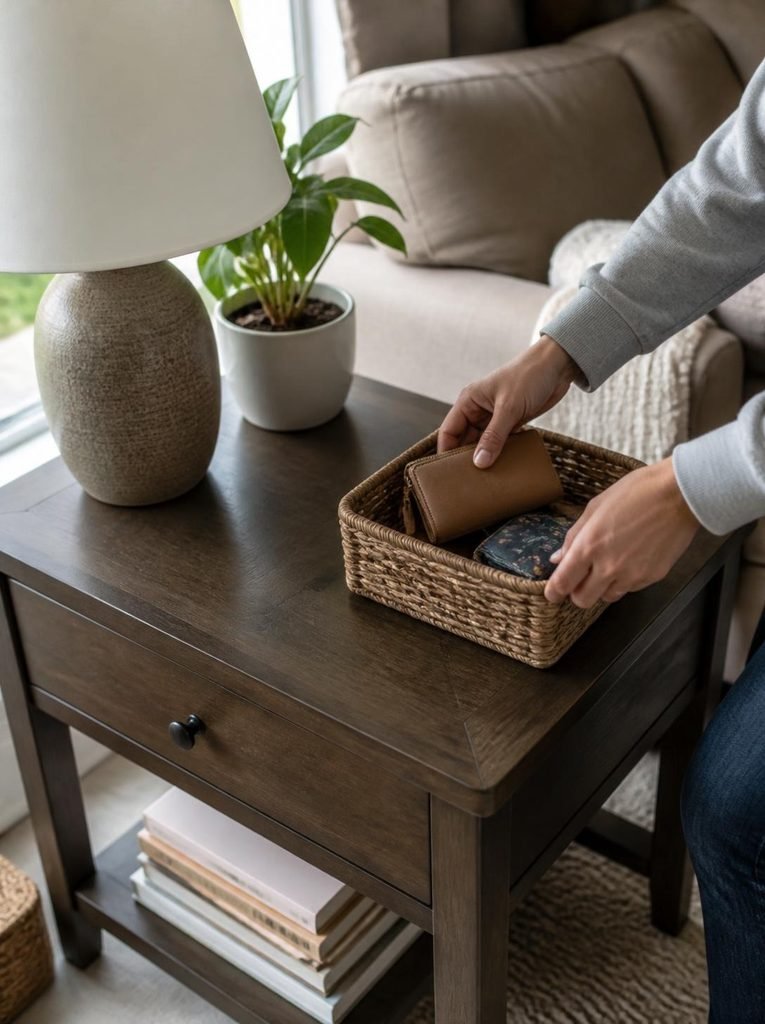
Instead, choose one small area that you can realistically finish today.
It could be your bedside table, one section of the kitchen counter, the chair covered in clothes, or a single pile of paperwork.
You are not committing to cleaning the whole room. You are committing to making one small area better than it was before.
Try the one-surface rule
Choose one surface and work only on that spot until it is clear.
For example, if your dining table is covered with shopping bags, mail, cups, and random household items, focus on the table alone.
Do not start reorganizing the pantry because you find a bag of snacks. Do not begin cleaning the entire kitchen because you notice dirty dishes.
Finish the table first.
Once you can see a clear surface, you have something concrete to feel good about. You have also created a usable space that makes the next task easier.
If the whole room feels impossible, make your starting area even smaller. A single corner counts. So does one drawer.
Your goal is progress, not a perfectly clean home by tonight.
2. Set a Timer for Just 10 Minutes
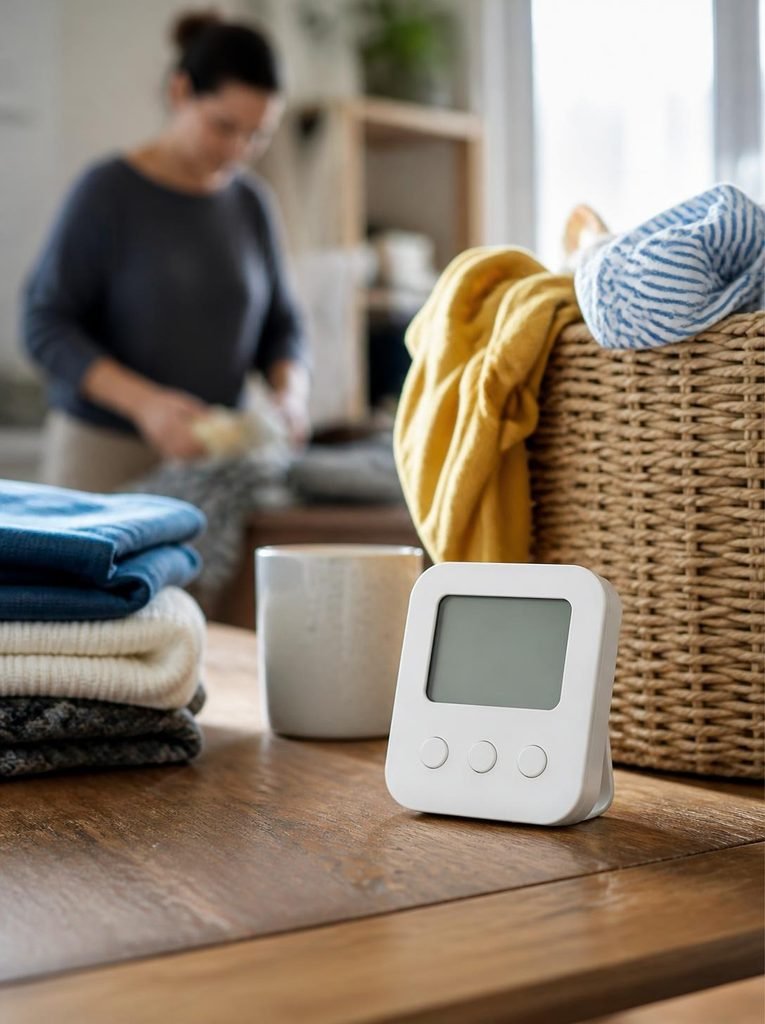
One of the easiest ways to get started when you are overwhelmed is to remove the pressure to finish everything.
Tell yourself you are going to declutter for just 10 minutes.
Not three hours. Not the entire afternoon. Just 10 minutes.
This works because starting often feels harder than the actual task. When you imagine spending the entire day cleaning, your mind may look for reasons to avoid it. A short session feels less demanding and gives you a clear stopping point.
During those 10 minutes, focus on simple actions:
- Throw away obvious rubbish.
- Collect dirty dishes and take them to the kitchen.
- Put dirty clothes into a laundry basket.
- Gather items that belong in another room.
- Remove empty packaging and unnecessary paper.
- Put away anything that already has an obvious home.
Avoid complicated decisions during this first session. You do not need to read every letter, try on every item of clothing, or decide what to do with every sentimental object.
You are simply removing the easiest clutter first.
What if the timer goes off and you are not finished?
That is completely fine.
You can stop, take a break, and return later. If you feel comfortable continuing, set another 10-minute timer.
The important thing is that you have started.
You may find that a short session creates enough momentum to continue. You may also find that 10 minutes is all you can manage that day. Both outcomes are acceptable.
If you are dealing with a particularly overwhelming home, several short sessions spread throughout the week may be more realistic than trying to force yourself through one exhausting cleaning marathon.
3. Grab a Trash Bag and Remove the Obvious Rubbish First
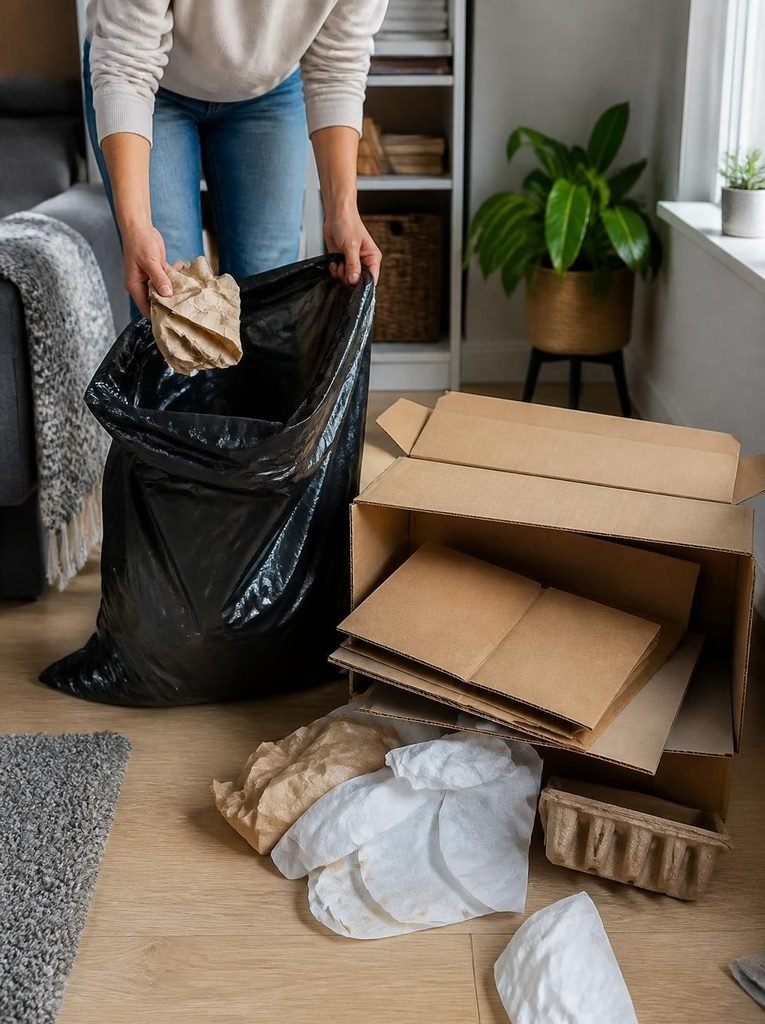
When your home is full of clutter, start with the things you already know you do not need.
You do not need to make a complicated plan before throwing away empty boxes, food wrappers, broken disposable packaging, or old receipts that have no practical purpose.
These items take up space without serving you, and removing them can make a messy area look noticeably better in a short amount of time.
Take a rubbish bag and walk through one room. Look for things that are clearly ready to go.
You might find:
- Empty delivery boxes and packaging.
- Old food containers that cannot be reused safely.
- Expired promotional flyers.
- Torn shopping bags.
- Empty bottles and wrappers.
- Broken items that are not worth repairing.
- Paper scraps and other obvious rubbish.
Be careful with important documents, financial records, personal information, medication, and anything that may need special disposal. Do not throw away something important simply because you want to move quickly.
Do not turn this into a deep-cleaning session
This is where it is easy to lose focus.
You might pick up an empty box, discover an old gadget inside it, and suddenly spend 20 minutes trying to figure out whether the gadget works. That is a different task.
For now, remove only what is obviously rubbish. Put uncertain items aside for a later decision.
Once you have removed the unnecessary packaging and trash, you will have fewer things competing for your attention.
And if the piles in your home contain a mixture of rubbish and belongings, do not worry about sorting every single item immediately. You can work through the remaining clutter in manageable stages.
4. Sort the Piles Without Creating Five New Piles
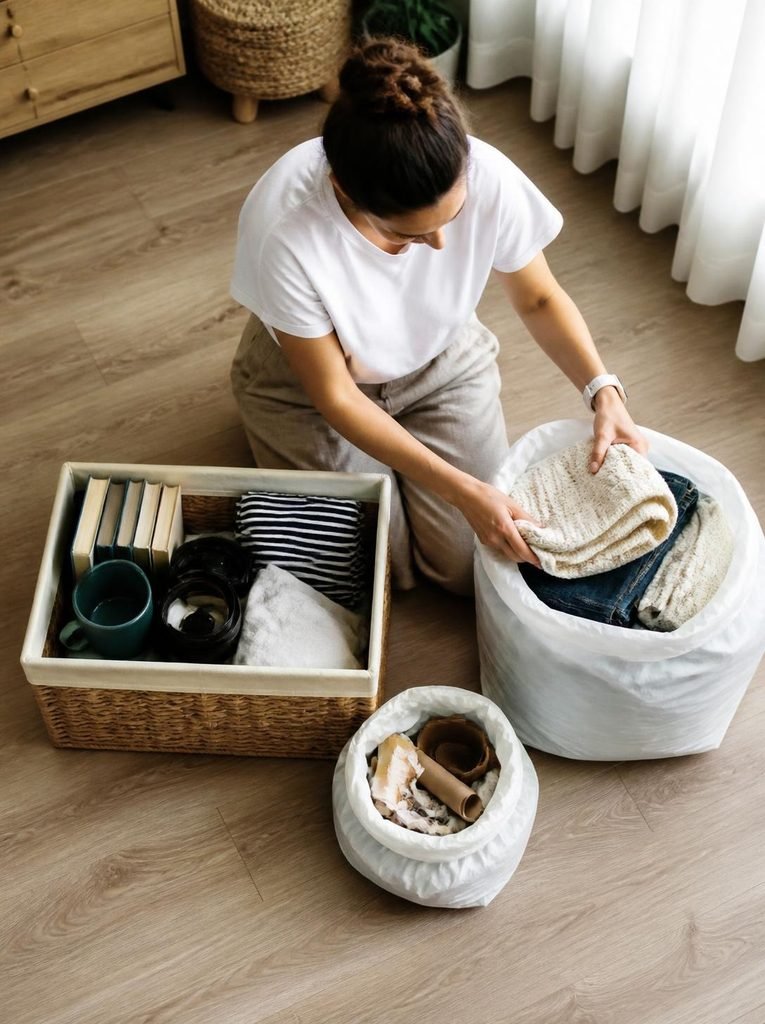
Have you ever started decluttering one pile, only to spread everything across the floor and end up with an even bigger mess?
It happens easily when you pull everything out before deciding what you are going to do with it.
If you are already overwhelmed, you do not need a complicated sorting system. You need one that keeps the mess contained.
Start with three basic categories:
Keep: Items you use, need, or genuinely want to keep.
Donate or give away: Items that are still useful but no longer serve you.
Trash or recycle: Items that are broken beyond practical repair, unusable, or no longer needed, with recycling used where appropriate.
You can use bags, baskets, or designated areas for these categories. The containers do not need to match, and you do not need to purchase anything new.
The most important rule is to keep each category contained. Avoid spreading everything across multiple rooms.
What about items that belong somewhere else?
You can use one additional basket for things that need to be returned to another room.
For example, if you are decluttering your bedroom, you might find drinking glasses, a book from the living room, a screwdriver, and a phone charger.
Place those items in the basket rather than leaving the bedroom repeatedly to put each one away. When you finish your current area, carry the basket around the house and return everything to its proper place.
This prevents you from getting distracted every few minutes.
Work through one pile at a time
Do not empty every cupboard, drawer, and storage box just because you have started feeling motivated.
Finish one pile before moving to the next.
If a pile is large, divide it into smaller sections. You could sort the left side of a table first, then the middle, then the right side.
You do not have to finish an entire room in one session. You simply need to avoid turning one manageable mess into several bigger ones.
5. Deal With the Clothes Pile That Keeps Coming Back
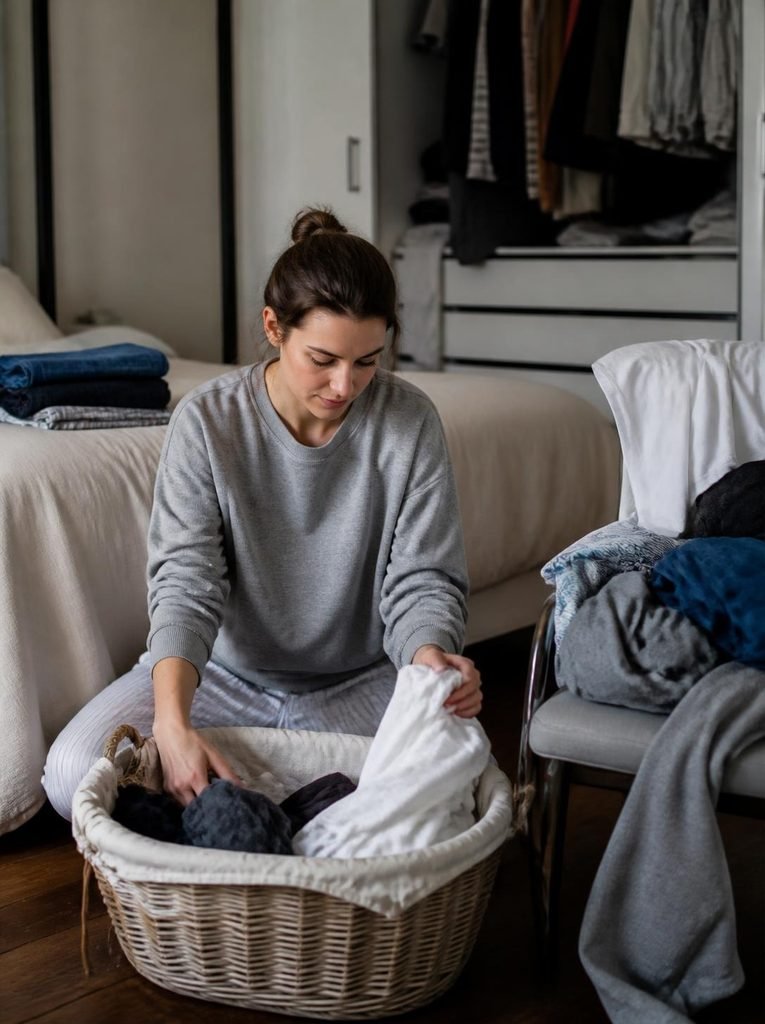
Clothes can become one of the most frustrating sources of clutter because they often move from the laundry basket to the bed, from the bed to a chair, and then back to the floor.
Before you know it, the chair you intended to sit on has become a permanent clothing storage area.
If this sounds familiar, do not start by reorganizing your entire wardrobe. Start by figuring out what kind of clothes you are dealing with.
Separate dirty clothes from clean clothes
First, collect the obviously dirty clothes and place them in the laundry basket.
Next, gather clean clothes that need to be folded or hung up. If you have clothes that you wore briefly and intend to wear again, put them in one designated place instead of scattering them around the room.
This first step alone can make the floor and furniture look much better.
Do not fold everything immediately
If you have a mountain of clean laundry, folding every item may feel like a huge task.
Work in small batches instead.
Fold five shirts. Hang up a few dresses. Put away one small stack of underwear or socks. Take a break if you need one.
You can also prioritize the clothes you need most often. Getting your everyday clothing back into drawers or onto hangers makes getting dressed easier while you work through the rest.
Declutter clothes you no longer need
Once the immediate pile is under control, consider removing clothes that no longer fit, are uncomfortable, or have not been useful to you.
You do not need to make every decision in one sitting. If you are struggling with sentimental items or expensive clothing you rarely wear, put those aside for a separate session.
For the moment, focus on making your clothes manageable again.
Give worn-but-not-dirty clothes a home
Some clothes are not ready for the laundry but are not clean enough to go back into the wardrobe.
Choose one specific place for these items, such as a hook, a small basket, or one section of a clothing rack. Keep the space limited so it does not become another overflowing pile.
The goal is not to make your bedroom look like a showroom. It is to make sure you can find your clothes, use your furniture, and keep laundry from taking over the room.
6. Deal With Random Stuff That Has No Home
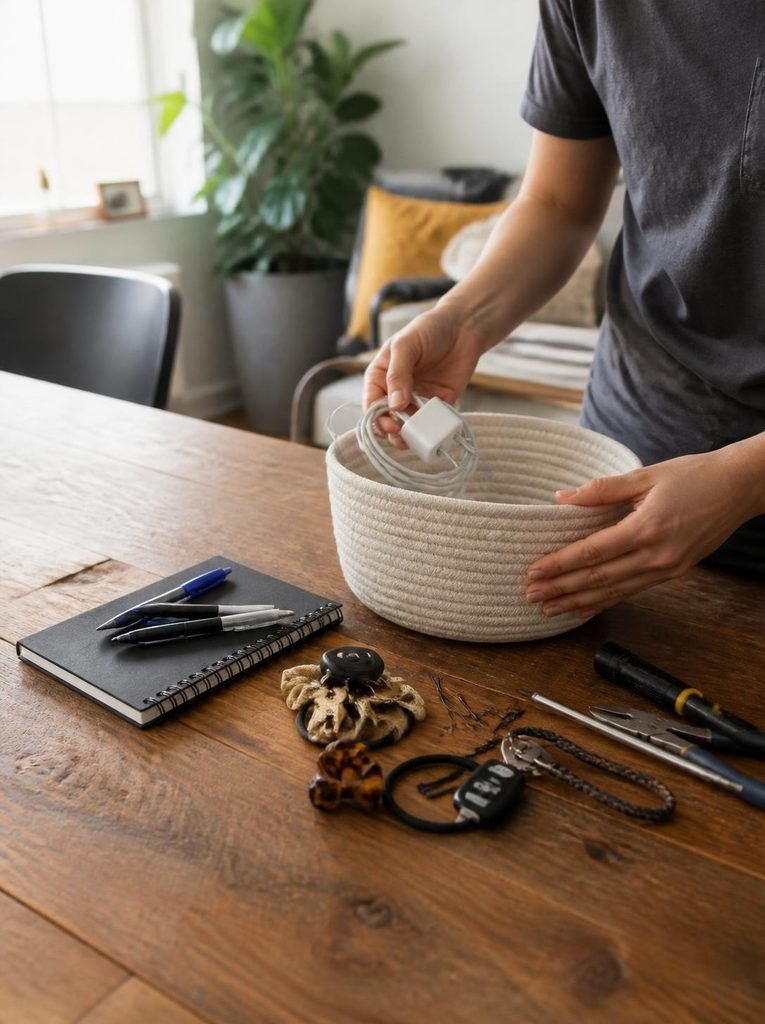
Every home has a collection of random things that seem to end up everywhere.
You might have chargers on the kitchen counter, pens beside the bed, hair accessories in the bathroom, tools in the living room, and shopping bags stuffed into a corner.
None of these items necessarily belongs in the rubbish, but together they can make your home look much messier than it actually is.
The problem is often that these things do not have a designated place.
When you do not know where something belongs, putting it away requires an extra decision. So you leave it on a nearby surface and tell yourself you will deal with it later.
Eventually, those little decisions become another giant pile.
Create one temporary collection basket
Grab a basket, box, or reusable bag and collect the small items scattered around one room.
Do not run around the entire house collecting everything at once. Start with the room you are already working on.
Once you have gathered the items, sort them into simple groups:
- Electronics and chargers.
- Personal care items.
- Stationery and office supplies.
- Tools and household accessories.
- Items that belong in other rooms.
- Things you no longer need.
Return items to places where you naturally use them. Keep chargers near the areas where you charge your devices, stationery near your workspace, and frequently used personal care products in an accessible spot.
You do not need to create an elaborate organization system for every small object.
Stop keeping things just because they might be useful someday
This is where random clutter can become difficult.
You might have several old phone chargers, empty containers, spare buttons, broken accessories, or miscellaneous cables that you have not used in years.
Ask yourself three questions:
- Have I used this recently?
- Do I have a specific reason to keep it?
- Would I realistically use it if I needed it tomorrow?
If you cannot identify a practical reason to keep an item, consider donating it if it is usable or disposing of it appropriately.
You do not need to keep every object simply because it might become useful under some imaginary future circumstance.
7. Stop Letting Paper Piles Take Over Your Home
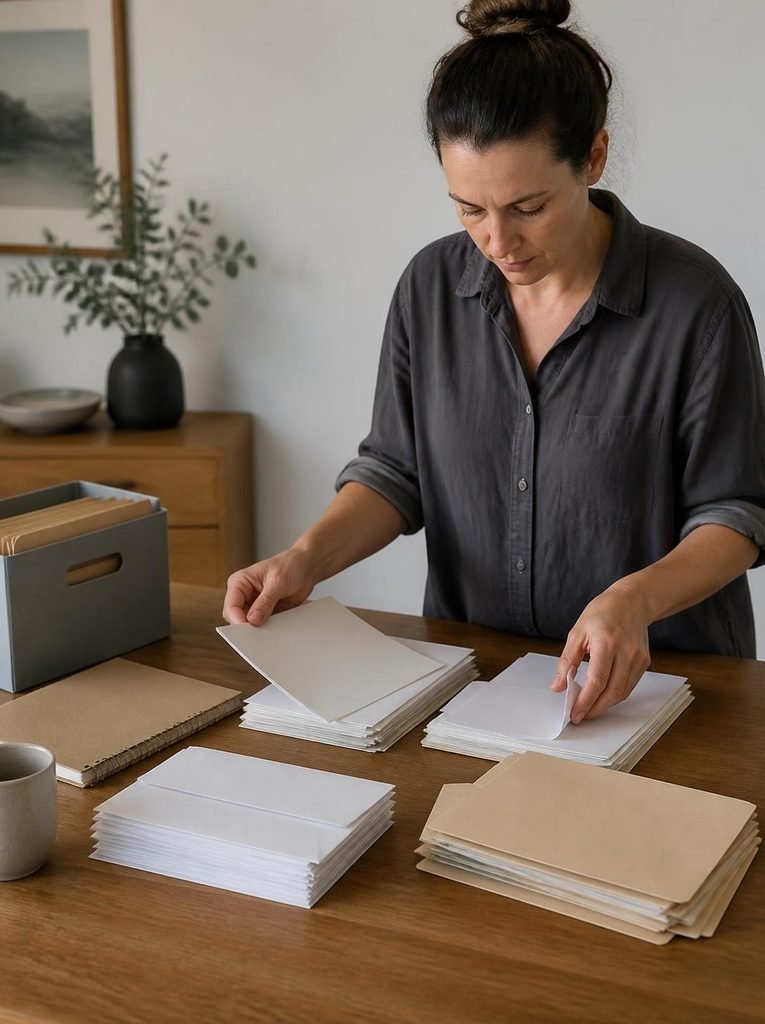
Paper clutter can be especially frustrating because it often contains a mixture of important documents and things you can throw away immediately.
You might have bills, receipts, delivery notes, instruction manuals, letters, school documents, and old notebooks mixed together on one table.
The longer you leave them, the more intimidating the pile becomes.
The trick is to stop treating every piece of paper as an equally important decision.
Start by separating papers into four categories
Important documents: Identification records, financial documents, legal paperwork, medical records, warranties, and other documents you may need to retain.
Action required: Bills that need attention, forms to complete, appointments to arrange, or letters that require a response.
Reference materials: Manuals, useful notes, and other information you genuinely need to keep.
Recycle or discard: Unneeded flyers, duplicate papers, envelopes, expired promotional materials, and receipts that are no longer necessary.
Be cautious with documents containing personal or financial information. Shred or securely destroy sensitive paperwork you no longer need rather than leaving it intact in ordinary rubbish.
Give important papers one home
You do not need a sophisticated filing cabinet to get started. A folder, document envelope, or small box can work.
The important thing is to stop spreading essential paperwork across different rooms.
Keep urgent documents somewhere visible enough that you will remember to act on them, while protecting sensitive documents in a secure location.
For paperwork that requires action, write down the next step. For example, instead of leaving a bill on the table as a reminder, add the payment to your task list and put the document in its designated place.
This helps separate the physical clutter from the responsibility attached to it.
Do not read every old paper today
If you find a stack of old notebooks or documents you have not looked at in years, you do not need to review every page during your first decluttering session.
Focus on obvious rubbish and urgent paperwork first. Set aside anything that genuinely requires careful review.
You are trying to make the pile manageable, not create another full-time job for yourself.
8. Declutter Your Kitchen Counters and Cupboards Without Emptying Everything
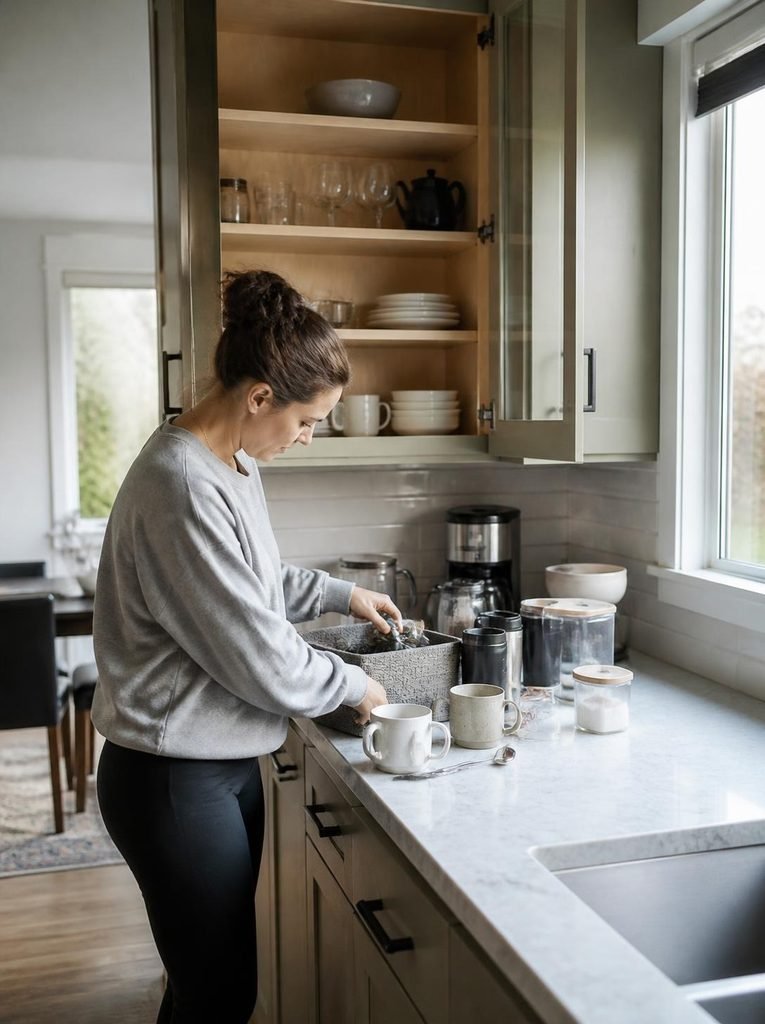
Kitchen clutter can make an already tiring day feel even harder. When the counters are crowded, there is nowhere to prepare food, and even making a simple meal can become frustrating.
You might have appliances you rarely use, random containers, old shopping bags, duplicate utensils, and pantry items scattered across several shelves.
Instead of pulling everything out of every cupboard, start with the spaces you use most often.
Clear the kitchen counter first
Remove anything that does not need to live on the counter.
Return dishes to their proper places, put away ingredients, collect rubbish, and relocate objects that belong elsewhere.
Keep only the appliances and everyday items you genuinely use and have room to store safely.
A clear section of counter gives you usable workspace immediately, even if the cupboards still need attention.
Check your food storage areas
Work through one shelf or one section of the pantry at a time.
Look for expired food, spoiled ingredients, damaged packaging, and products you no longer intend to use. Follow local food safety guidance when deciding whether something is safe to keep.
Group similar items together so you can see what you already have. For example, keep baking ingredients together, group breakfast foods in one area, and store frequently used cooking ingredients where they are easy to reach.
This can help reduce duplicate purchases and make meal preparation less stressful.
Let go of kitchen items you never use
Consider whether you really need every mug, plastic container, old water bottle, duplicate utensil, and kitchen gadget you own.
If you have more containers than lids, more mugs than you can comfortably store, or appliances you have not touched in years, it may be time to let some go.
Keep what serves your household rather than trying to preserve every item you have ever purchased.
9. Make Peace With Sentimental Clutter

This is often one of the hardest parts of decluttering.
Some items are difficult to release because they remind you of a loved one, an important moment, a former version of yourself, or something you once hoped to do.
You may have old gifts, childhood belongings, clothes that belonged to someone special, cards, photographs, or objects connected to memories you do not want to lose.
There is no need to rush these decisions.
Remember that keeping a memory does not require keeping everything
You can appreciate the person who gave you a gift without keeping every gift forever. You can remember an experience without holding on to every object connected to it.
But that does not mean you must throw away everything sentimental to have an organized home.
Choose the belongings that matter most to you and give them a defined place. This might be a memory box, a small shelf, a photo album, or a digital collection of photographs of items you no longer have room to store.
The aim is to preserve what is meaningful without allowing every memory to become another source of clutter.
Use a separate box for difficult decisions
If an item makes you emotional or you genuinely cannot decide what to do with it, set it aside.
Do not let one difficult object stop you from making progress on an entire room.
You can return to those belongings when you have more time and emotional energy.
And remember, there is no deadline requiring you to make every sentimental decision today.
10. Stop Buying Organizers Before You Declutter
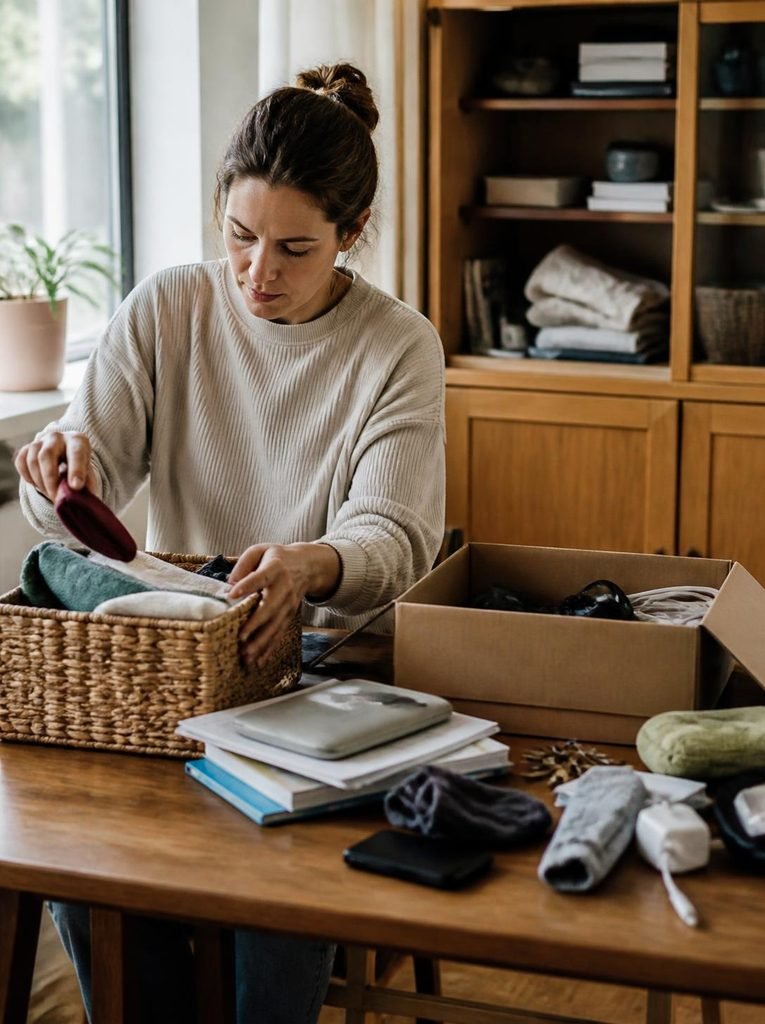
It is tempting to buy storage baskets, drawer dividers, clear containers, shelves, and decorative boxes when your home feels messy.
Sometimes these things are useful. But buying organizers before reducing clutter can leave you with even more stuff to manage.
A basket does not solve the problem if it simply becomes another place to hide things you do not need.
Before purchasing anything, declutter the items you already own and see what storage space becomes available.
Then look at the belongings you have decided to keep.
Ask yourself:
- Can I store these items in a drawer or cupboard I already have?
- Would a simple box or basket solve the problem?
- Do I need a new organizer, or do I simply own too much for the space available?
- Will this storage solution make the items easier to find and put away?
If you genuinely need a storage product, measure the available space and choose something practical. You do not need matching containers throughout your home to have an organized space.
Declutter first, organize second, and buy storage only when there is a clear need.
11. Give Every Frequently Used Item a Home
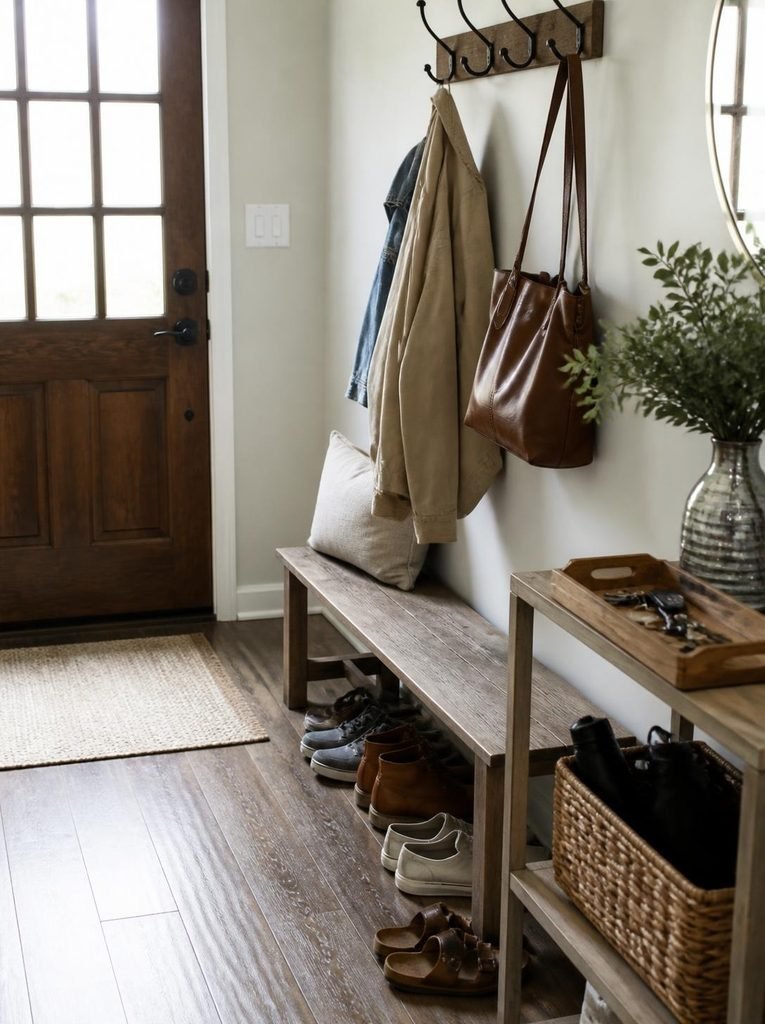
One reason clutter keeps returning is that putting things away takes too much effort.
If your keys do not have a designated spot, you leave them on the nearest table. If your bag has no regular place, it ends up on a chair.
If everyday cleaning supplies are difficult to reach, you may leave them wherever you last used them.
The easier it is to put something away, the more likely you are to do it consistently.
Create simple drop zones
Choose convenient places for the things you use regularly.
For example:
- Keys and everyday essentials near the entrance.
- Bags on hooks or in a designated storage area.
- Laundry in accessible hampers.
- Remote controls in one small container.
- Cleaning supplies in a safe, appropriate storage location.
- Chargers near the devices they serve.
- Important mail in one designated tray or folder.
The best location is one that makes sense for your daily routine.
You do not need a label for every basket or a separate container for every category. The system should be simple enough that you can use it even when you are tired.
Avoid creating storage spaces that are difficult to maintain
If you need to move several boxes just to put away one item, you may eventually stop using that system.
Keep frequently used items easy to reach and avoid overfilling drawers or shelves.
A practical home organization system should make everyday life easier, not give you another set of rules to follow.
12. Use a Simple Daily Reset Instead of Waiting for Another Big Clean
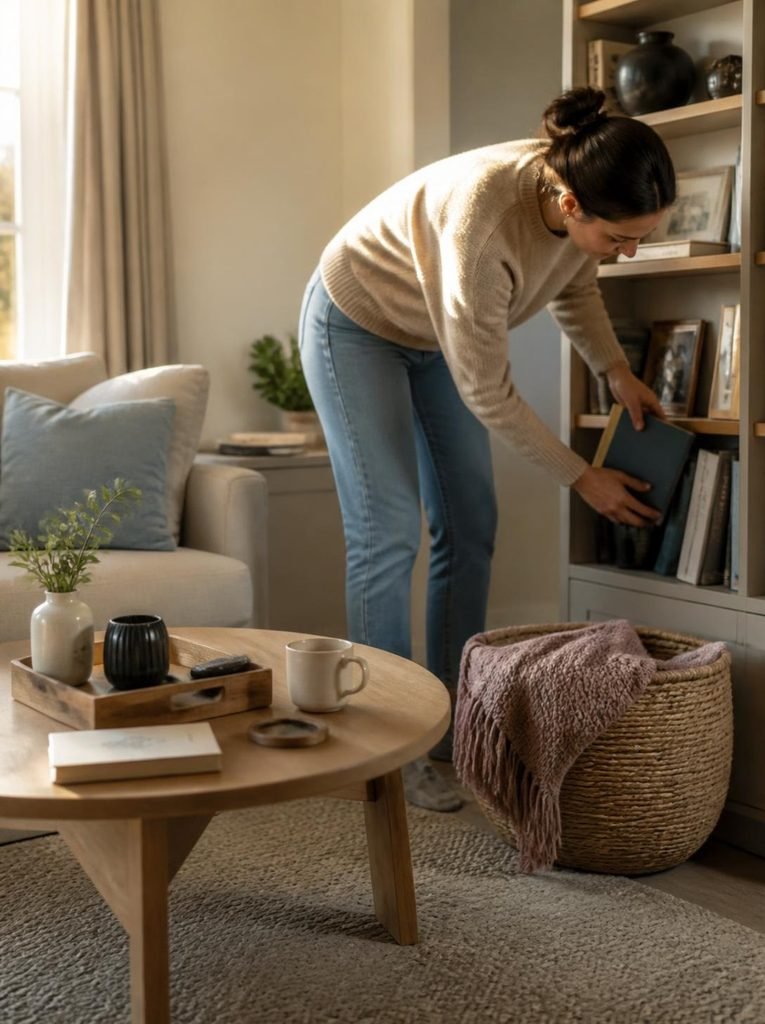
You have finally cleared a table, sorted a pile of clothes, or made your kitchen usable again. The last thing you want is to see the same mess return a few days later.
The good news is that maintaining a reasonably tidy home does not require repeating the entire decluttering process every week.
What helps is having a small, realistic routine.
Try a 10-minute evening reset
Before going to bed, spend a few minutes returning your home to a more manageable state.
You could:
- Put dirty dishes in the kitchen.
- Return loose items to their designated places.
- Put dirty clothes in the laundry basket.
- Clear one frequently used surface.
- Throw away obvious rubbish.
- Prepare one area for the following morning.
You do not have to do every task every night. Choose the actions that make the biggest difference in your household.
If you are exhausted, prioritize food waste, anything that affects hygiene or safety, and items that are blocking spaces you need to use. Leave less urgent organizing tasks for another time.
Follow the one-in, one-out rule where it makes sense
For categories that tend to accumulate, such as clothing, mugs, books, and decorative items, consider removing one item when you bring another one home.
This is not a rule you need to apply to everything. Household supplies and necessary replacements are different.
The idea is simply to pay attention to what enters your home so that the amount of stuff does not keep growing indefinitely.
13. What to Do When You Feel Like Giving Up

There may be a point when you look around and feel that your progress is too small.
Perhaps you have cleared one table, but the floor is still messy. Maybe you have sorted a bag of clothes, but there are three more bags waiting. You might feel tired, frustrated, or embarrassed that the clutter became so overwhelming in the first place.
This is when you need to change how you measure progress.
Do not judge your effort only by whether the entire room looks finished.
Ask yourself what has improved.
Can you sit on the chair again? Is the kitchen counter usable? Can you walk safely through the room? Have you removed a bag of rubbish? Is it easier to find your clothes?
Those are real improvements.
Take breaks before you completely run out of energy
You do not need to push yourself until you are exhausted.
Drink some water, eat if you need to, sit down, or leave the task until later. If you have limited energy or physical capacity, shorter sessions may be more sustainable than long cleaning marathons.
If the mess is too much for one person to manage, it is also reasonable to ask a trusted friend or family member for help. You can ask them to help with one specific task, such as carrying donation bags or sorting a particular area.
If clutter has become severe enough to block exits, create hygiene problems, or make parts of your home unsafe, prioritize those hazards first and consider seeking practical support.
There is no shame in needing help.
Stop comparing your home to pictures online
Organized homes on social media often show carefully selected rooms, staged spaces, or homes that have been cleaned specifically for photography.
Your home is a place where you live. It will contain everyday belongings, laundry, dishes, and evidence of normal life.
You do not need a perfect-looking home to benefit from decluttering.
You need a home that functions better for you.
14. Follow This Simple Seven-Day Decluttering Plan
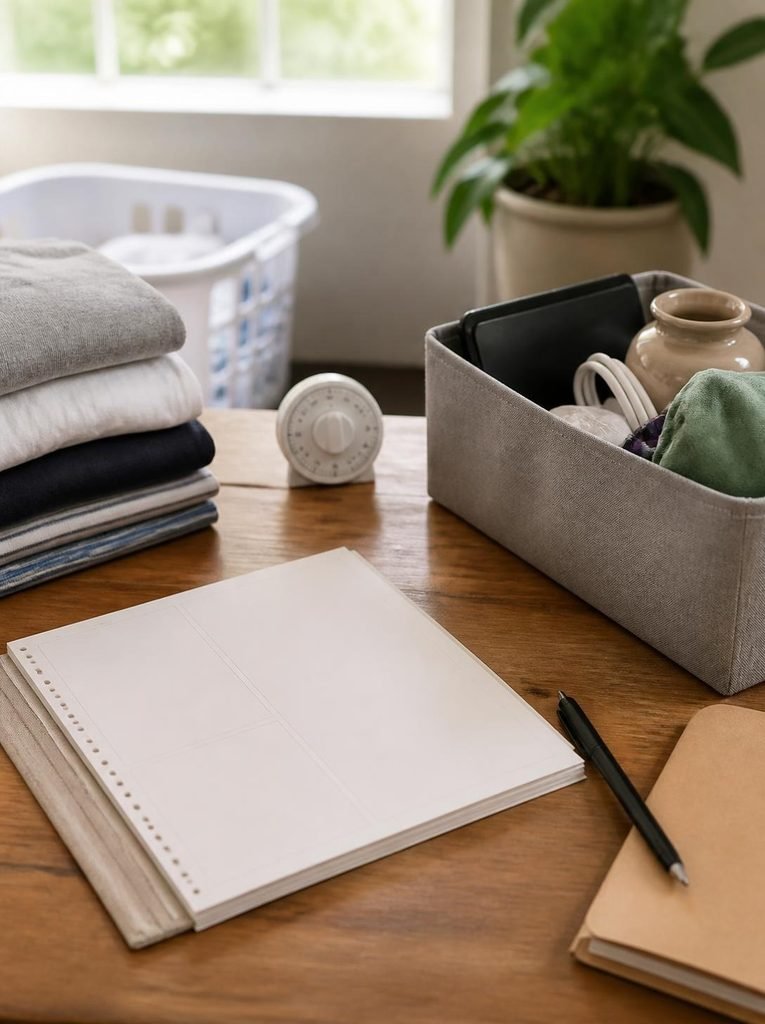
If you are overwhelmed by too many decisions, use the following plan to give yourself some structure. You can spread it over more than seven days if necessary.
Day 1
Remove obvious rubbish
Spend 10 to 20 minutes collecting rubbish and empty packaging from one area.
Day 2
Tackle the clothes
Separate dirty laundry from clean clothes and put away a manageable batch.
Day 3
Clear one surface
Choose a table, countertop, desk, or bedside table and make it usable again.
Day 4
Sort paper clutter
Separate important documents, papers requiring action, reference materials, and rubbish.
Day 5
Reset the kitchen
Clear one counter and organize one shelf or cupboard.
Day 6
Handle random items
Gather misplaced belongings, return them to their homes, and let go of things you no longer need.
Day 7
Review and maintain
Remove rubbish, put away donations, notice what improved, and choose your next small task.
You can change the order depending on which area bothers you most. If the kitchen is making daily life difficult, start there. If clothes are covering your bed, prioritize the laundry.
This is a flexible plan, not another deadline to feel guilty about missing.
15. Make Your Home Easier to Maintain, Not Perfect

Once you have reduced some of the clutter, the next step is to make sure your home works for your real life.
If your storage spaces are constantly overflowing, you may need to reduce the number of belongings you keep.
If laundry piles up because you dislike folding clothes, consider simpler storage that requires less folding.
If papers accumulate because you never know where to put them, create one reliable place for incoming documents.
Look at the habits that contribute to the mess and make small adjustments where possible.
You can also decide which areas matter most to you. Maybe you want a clear kitchen counter, a usable bed, and a living room where you can relax.
Those priorities can guide your efforts without requiring every cupboard and drawer to be perfectly organized.
The aim is to create a home that supports your everyday needs.
You will probably still have laundry to do, dishes to wash, and items to put away. That is normal. A clutter-free home is not a home where nothing ever gets messy.
It is a home where messes are easier to manage because there is less excess stuff and a practical place for the things you use.
Final Thoughts
Decluttering all your piles of crap when you are super overwhelmed can feel like an enormous task, especially when the mess has been building for a long time.
But you do not have to solve every problem in one day.
Start with one small area. Remove obvious rubbish. Sort one pile without spreading your belongings across the entire house. Put away a few clothes, clear a surface, or collect the random things that have been sitting around for weeks.
Then stop if you need to.
You are allowed to make progress slowly. You are allowed to take breaks. And you do not need to feel embarrassed about needing a fresh start.
The most important thing is to make your next step small enough that you can actually take it.
You do not need to clean your entire home today. You just need to make one little part of it easier to live in.